Your wood fence is a big part of your home’s curb appeal, but it takes a beating from the San Diego sun. When it starts looking gray and weathered, you have a big decision to make: should you stain or paint your fence? The right choice protects your investment and saves you from re-doing the work every couple of years.
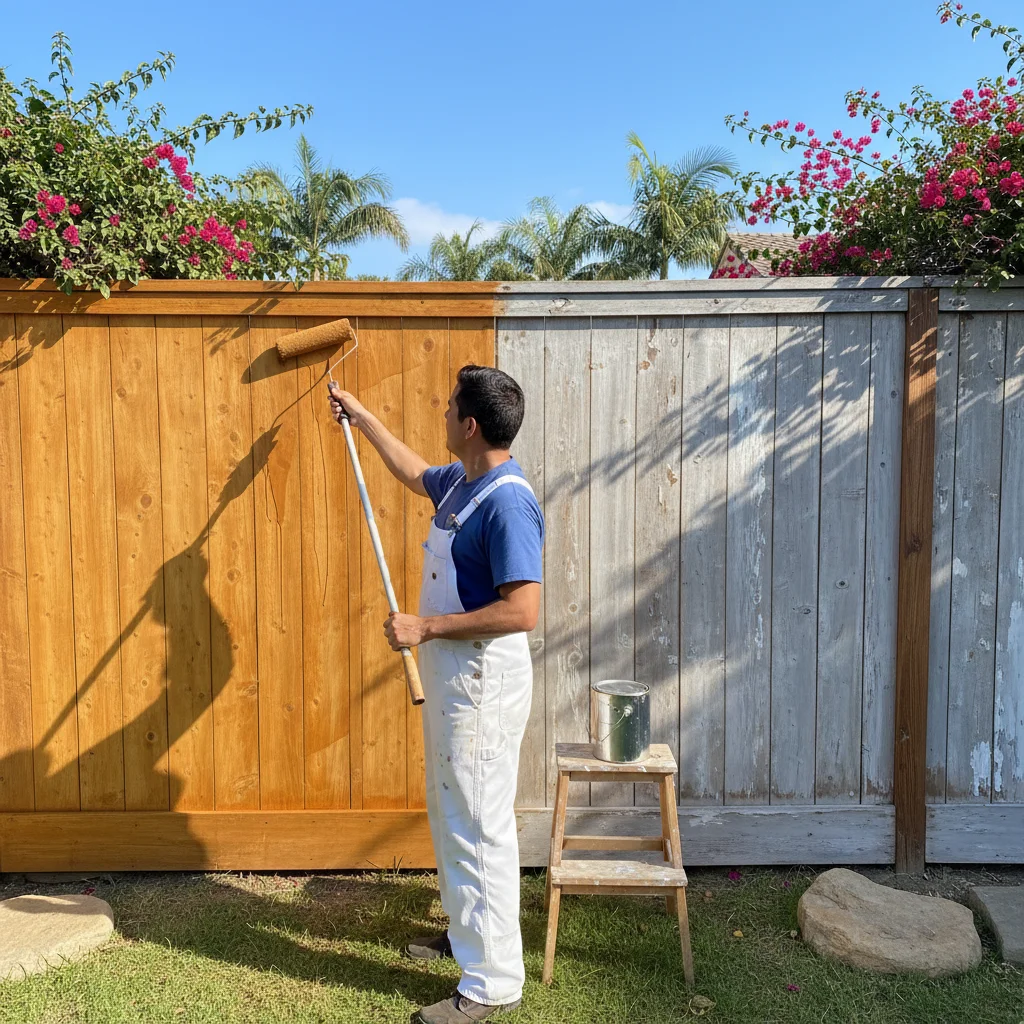
What stain does that paint can’t (and vice versa)
Choosing between stain and paint comes down to how you want the finish to look, perform, and age over time. They are fundamentally different products that interact with wood in opposite ways.
Stain soaks into the wood. Think of it like a moisturizer for your fence. It penetrates the wood fibers, protecting them from the inside out against moisture and UV damage. Because it becomes part of the wood, it can’t peel or chip.
-
Pros of Staining:
- Highlights Natural Beauty: Semi-transparent and transparent stains let the natural wood grain and texture show through.
- Graceful Aging: Stain fades slowly and evenly over time instead of peeling or flaking.
- Easier Maintenance: Re-staining is simple. You just need to clean the fence and apply a new coat. No scraping required.
-
Cons of Staining:
- Fewer Color Options: Stains come in a range of natural wood tones, but you won’t find the limitless color palette that paint offers.
- Less Imperfection Coverage: A transparent stain won’t hide knots, discoloration, or previous repairs.
Paint sits on top of the wood. It forms a thick, protective film over the surface. This film acts as a barrier, blocking UV rays and sealing out moisture completely.
-
Pros of Painting:
- Unlimited Color Choice: You can match your fence to your home’s trim, siding, or any other color you can imagine.
- Hides Flaws: Paint provides a uniform, solid finish that completely covers old, weathered wood, stains, and imperfections.
- Maximum UV Protection: A high-quality exterior paint offers excellent protection against sun damage.
-
Cons of Painting:
- Prone to Peeling: Because it’s a surface film, paint is vulnerable to chipping, cracking, and peeling as the wood expands and contracts.
- Traps Moisture: If water gets behind the paint film through a small crack, it can get trapped, leading to wood rot.
- Difficult to Redo: Once paint fails, it must be completely scraped and sanded off before you can repaint, a very labor-intensive process.
How San Diego sun and dry air change the math
In many parts of the country, paint can be a durable option for fences. But here in San Diego County, our climate creates a unique set of challenges that heavily favor stain.
The biggest factor is the relentless, year-round sun. The intense UV radiation breaks down the binders in paint, making the film brittle. As the wood naturally expands in the daytime heat and contracts in the cool evenings, this brittle paint film can’t flex with it. This leads to cracking and, eventually, widespread peeling.
This problem is most obvious on the horizontal surfaces of your fence—the top edge of the pickets and the top of the rails. These surfaces get the most direct sun exposure. If you’ve ever seen a painted fence in San Diego that’s peeling on top but looks fine on the vertical faces, this is why.
Paint creates a barrier that can trap moisture, but San Diego’s dry air means that’s less of a concern than UV damage. For us, the key is choosing a finish that can handle the sun and move with the wood. Stain does this perfectly. Because it penetrates the wood, it doesn’t form a film that can fail. It simply fades slowly over time, signaling that it’s time for a simple maintenance coat. This makes it a more reliable and lower-maintenance choice for our climate. Our professional fence and deck staining services use products specifically formulated for this kind of environment.
Cost per linear foot: stain vs paint in 2026
When budgeting to refinish your fence, the upfront cost is a major consideration. While prices vary based on the fence’s height, condition, and accessibility, we can provide some general ranges for San Diego homeowners.
- Fence Staining Cost: $2 – $4 per linear foot. This typically includes a light cleaning and the application of one or two coats of a professional-grade stain.
- Fence Painting Cost: $3 – $6 per linear foot. Painting is almost always more expensive due to the extra labor and materials involved.
Why the price difference? A proper exterior painting job on a fence requires more steps. After cleaning, the fence often needs to be spot-primed or fully primed to ensure the paint adheres correctly and to block tannins from bleeding through. The paint itself is also a thicker product and can be more time-consuming to apply evenly.
When you’re comparing quotes, remember to look at the long-term value. While staining might be slightly cheaper upfront, its real savings come from lower maintenance costs down the road. Repainting a peeling fence in five years will be far more expensive than applying a simple maintenance coat of stain.
Lifespan: 3 years vs 7 years
The lifespan of a fence finish is where the difference between stain and paint becomes most clear, especially in San Diego.
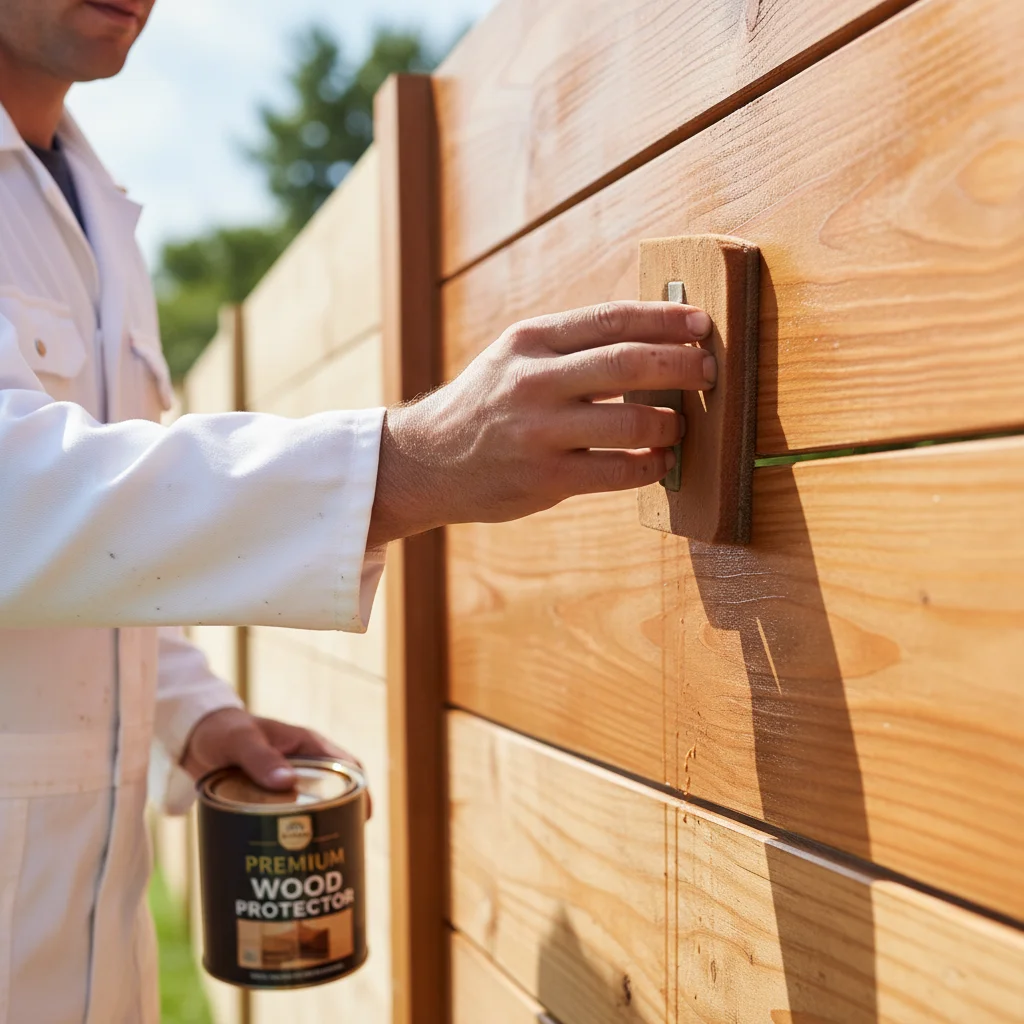
A quality semi-transparent stain, like one from Cabot or Ready Seal, will typically need a maintenance coat every 2 to 4 years. This sounds frequent, but the process is straightforward: clean the fence and apply a new coat. There’s no scraping or heavy prep. The fence never goes through an “ugly” peeling phase; it just gradually lightens.
A high-quality paint job, using a premium product like Behr Premium Plus Exterior, can theoretically last 5 to 7 years under ideal conditions. The problem is that San Diego is not an ideal condition for painted wood. We often see paint on fences begin to fail in as little as 3 years, starting with the sun-baked horizontal surfaces.
Once paint fails, it fails completely. It peels and flakes, exposing the wood underneath and looking terrible. At that point, your only option is a costly and time-consuming process of scraping, sanding, and starting over. Stain, on the other hand, offers a predictable and manageable maintenance schedule without the risk of catastrophic failure.
For San Diego homeowners looking for the best fence stain that balances durability and appearance, we often recommend oil-based, semi-transparent stains that can handle the UV exposure and keep the wood healthy.
Prep work that makes either one last
No matter which finish you choose, the final result is only as good as the preparation. Rushing this step is the fastest way to guarantee failure, whether you’re using stain or paint.
Proper prep always starts with a thorough cleaning. We use pressure washing to remove years of built-up dirt, grime, mildew, and any loose, flaky bits of a previous finish. This step is non-negotiable for getting good adhesion and a clean look.
After cleaning, the fence needs to dry completely, which usually takes a day or two in our dry climate. Then, we perform any necessary repairs, like replacing rotted boards or securing loose pickets.
From here, the prep diverges:
- For Staining: The goal is to open up the wood’s pores so the stain can penetrate deeply. A light sanding is often required, especially if the wood has a “mill glaze” from the lumber yard or is particularly weathered. The surface must be completely free of any old paint or film-forming finish.
- For Painting: The surface needs to be clean, dry, and dull. Any glossy areas of old paint must be scuffed up with sandpaper. Bare wood must be primed to prevent tannins from staining the new paint and to ensure the topcoat sticks. Peeling paint must be scraped and sanded smooth to avoid a bumpy final texture.
Proper prep is labor-intensive, but it’s the single most important factor in how long your fence finish will last.
When to switch a painted fence back to stain
We talk to many homeowners who are tired of the endless cycle of scraping and repainting their fence. They want to switch to the lower-maintenance option of stain, but they don’t know where to start.
You can absolutely switch a painted fence to a stained one, but it is a significant project. You cannot simply apply stain over paint. Stain needs to soak into bare wood, so every last bit of the old paint must be removed first.
The process involves:
- Stripping: Using a combination of chemical paint strippers, heat guns, and scraping tools to remove the bulk of the paint.
- Sanding: Once the paint is stripped, the entire fence must be sanded down to fresh, bare wood. This removes any remaining paint residue and opens the wood pores.
- Cleaning: A final cleaning to remove all dust and debris before staining can begin.
This is a very demanding job that requires the right tools, safety equipment, and a lot of patience. It’s often more work than building a new fence from scratch. However, once it’s done, you’ll have a beautiful, natural-looking fence and can begin a simple stain maintenance routine, freeing you from the cycle of peeling paint. Because of the complexity and tools required, this is a job best left to licensed professionals who specialize in finish removal.
When to call us
Deciding whether to stain or paint your fence involves weighing aesthetics, budget, and long-term maintenance. Here in San Diego, the evidence points clearly toward stain as the more durable, climate-appropriate choice that avoids the peeling and chipping common with painted fences.
If your fence is looking tired, or if you’re ready to switch from a failing paint job to a beautiful, long-lasting stain, we can help. Our team handles every step, from thorough prep to professional application.
Call us at (858) 925-5546 for a same-day estimate.