Stucco is the quintessential look for San Diego homes, but it comes with a common frustration: cracks. Seeing a spiderweb of lines or a single jagged crack appear on your exterior walls can be worrying. The good news is that most stucco cracks are cosmetic and completely fixable with the right preparation before painting.
However, just painting over them is a guaranteed way to see them reappear in a year or two. True stucco crack repair in San Diego requires understanding the type of crack you have, what caused it, and using the right materials to ensure a durable, beautiful finish.
Hairline cracks vs structural cracks: how to tell the difference
The first step in any stucco repair project is diagnosing the problem. Not all cracks are created equal. In our experience, about 95% of the cracks we see on San Diego homes are superficial hairline cracks. The other 5% are structural and signal a deeper issue.
Hairline Cracks
These are the most common type of stucco crack. They are typically very thin, less than 1/16th of an inch wide (about the thickness of a credit card). You might see them spreading out from the corners of windows and doors, or in a web-like pattern often called “map cracking.” These are almost always a cosmetic issue caused by the normal expansion and contraction of the building materials. They are a normal part of a stucco home’s life and are easily addressed during a professional paint job.
Structural Cracks
Structural cracks are more serious. They are wider than 1/8th of an inch and often appear as a single, continuous line that runs diagonally across a wall. You might also see stairstep cracks in block walls or vertical cracks that run the full height of a wall. These cracks indicate that the building itself is moving or has a foundation issue. You might also notice other signs like sticky doors or windows near the crack. If you see cracks like this, painting is not the first step. You need to call a licensed stucco contractor or a structural engineer to assess the underlying problem. Painting over a structural crack is like putting a bandage on a broken arm; it hides the problem but doesn’t fix it.
What causes stucco cracks in San Diego (settling, heat, moisture)
Our unique San Diego climate and environment create a specific set of challenges for stucco exteriors. Understanding what causes cracks can help you know what to look for.
- Foundation Settling: All houses settle over time. Minor settling is normal and usually results in harmless hairline cracks. San Diego County has diverse geology, from coastal soils to inland clay, and this ground movement is a primary cause of stucco stress.
- Thermal Stress (Heat): We love our sunny days, but that constant sun exposure heats up your exterior walls. As the stucco heats up, it expands. When it cools down at night, it contracts. This constant cycle of expansion and contraction puts stress on the rigid stucco finish, eventually leading to small cracks. This is especially true for darker colored homes that absorb more heat.
- Moisture Intrusion: While we don’t get a lot of rain, our coastal marine layer can introduce persistent moisture. More often, cracks are caused by water getting behind the stucco from other sources. Improperly sealed windows, leaky gutters, or sprinklers hitting the wall are common culprits. Once water gets behind the stucco, it can cause the underlying wood lath to swell and contract, cracking the stucco from within. This is why a key part of any exterior painting project is checking and sealing all potential entry points for water.
Repair methods: caulk, patch, elastomeric coating
Once you’ve identified that your cracks are non-structural, it’s time for the repair. A professional painter will choose the right method based on the crack’s size and location. Simply slathering patch over every crack is not the right approach.
Flexible Caulk for Hairline Cracks
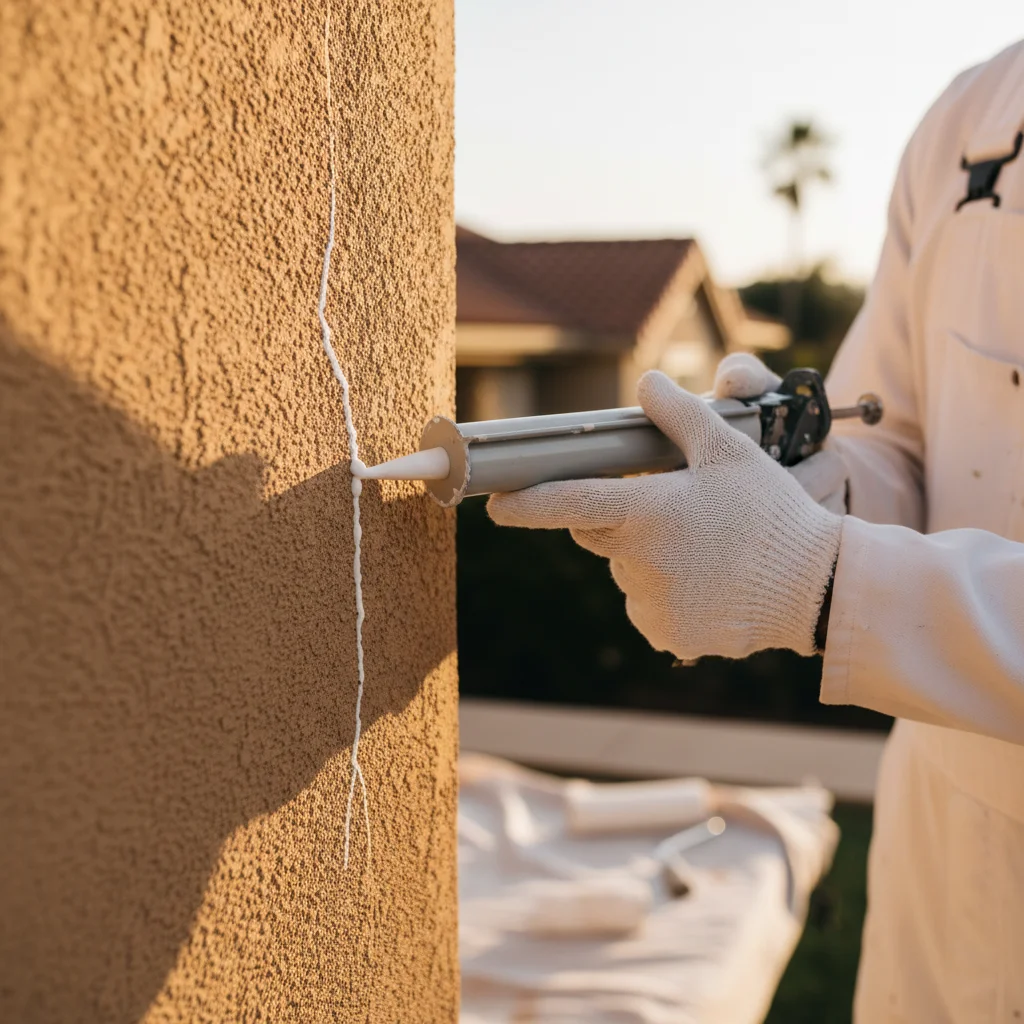
For standard hairline cracks, a high-quality elastomeric caulk is the best tool. We often use a product like Big Stretch because it’s designed to remain flexible. We first clean out the crack to ensure a good bond. Then, we apply a thin bead of caulk and tool it smooth to blend with the surrounding texture. The flexibility is key; as the house continues its natural expansion and contraction, the caulk moves with it, keeping the crack sealed and invisible.
Stucco Patch for Larger Cracks and Chips
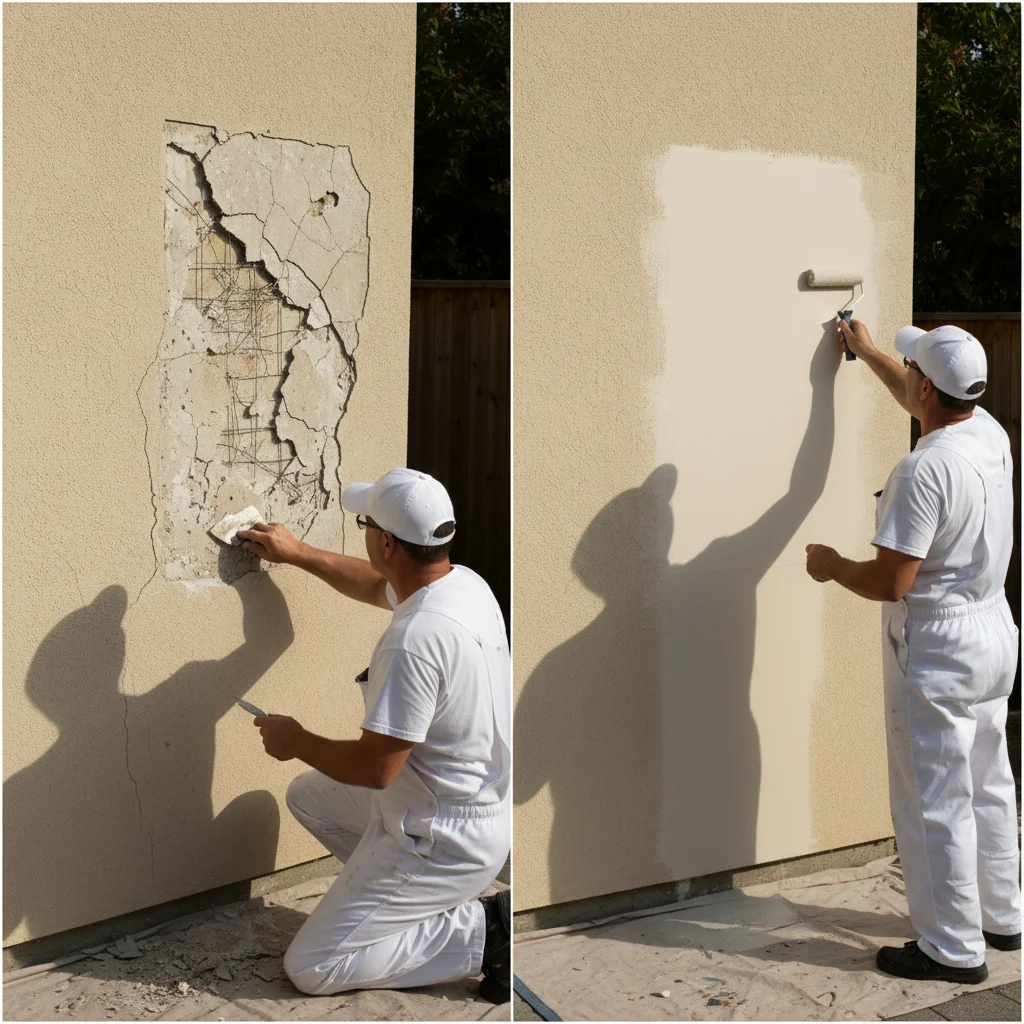
For cracks wider than 1/16th of an inch or for areas where the stucco has chipped off, a pre-mixed stucco patch is the solution. We use products like Quikrete Stucco Patch for this. The process is more involved than caulking. We first chisel out any loose debris from the crack to create a solid base. Then we apply the patching compound, making sure to press it firmly into the crack. The final, crucial step is matching the texture of the surrounding stucco. This is an art form that takes experience, using a trowel or sponge to mimic the original finish so the repair is invisible after painting.
When elastomeric paint solves the problem (and when it doesn’t)
You may have heard of elastomeric paint as a miracle solution for cracked stucco. It’s a fantastic product when used correctly, but it’s not a cure-all.
Elastomeric paint is a thick, high-build acrylic paint that forms a waterproof, flexible membrane over the stucco. It’s about 10 times thicker than standard exterior paint. Its main benefit is its ability to bridge existing hairline cracks and stretch to cover new ones that might form. For a house with extensive map cracking, a full coat of an elastomeric product like Dunn-Edwards Acri-Hues can provide a uniform, durable, and long-lasting finish. It’s a cornerstone of our stucco painting and repair services.
However, elastomeric paint has limitations. It is not a substitute for proper crack repair. You can’t just paint it over a 1/8-inch crack and expect it to hold. The underlying crack must still be properly patched before painting. It also cannot fix a structural problem. If the wall itself is moving, no paint in the world, no matter how thick, will stop that crack from re-opening. Finally, because it forms such a tight waterproof barrier, it can trap moisture if there’s an underlying water intrusion issue. That’s why it’s critical to solve any leaks before applying an elastomeric coating.
Prep sequence: clean, repair, prime, paint
A beautiful, long-lasting paint job is 80% preparation. The actual painting is the easy part. For stucco, a specific sequence must be followed to ensure the paint adheres properly and the repairs remain invisible. It’s a more detailed process than many homeowners realize.
- Clean: Every project starts with a thorough pressure wash. This removes the fine layer of dirt, salt air deposits, and chalky old paint that prevents new paint from bonding. We take care to use the right pressure so we clean the surface without damaging the stucco itself.
- Repair: This is the stage where we perform all the stucco hairline crack repair and patching discussed above. We carefully inspect every square foot of the exterior, caulking and patching as needed. We then allow these repairs to cure completely, which can take anywhere from a few hours to a few days depending on the product and weather.
- Prime: Priming is a non-negotiable step, especially over fresh patches. New stucco patch material is very porous and will absorb paint differently than the surrounding wall, leading to a blotchy look called “flashing.” We apply a quality masonry sealer or primer over all repaired areas, and often over the entire house if the old stucco is particularly chalky or porous.
- Paint: Finally, we apply two full coats of premium exterior paint. This ensures complete coverage, true color depth, and the maximum lifespan for the paint job.
This systematic approach is something we’ve covered in more detail in our complete guide to stucco prep. Following these steps is the only way to get a finish that lasts.
What a real stucco-and-paint quote should include
When you get estimates for your stucco painting project, the details matter. A low price on a vague quote can often mean corners are being cut on the crucial prep work. A professional, trustworthy quote should be specific and transparent.
Here’s what to look for:
- Detailed Scope of Work: The quote should list out the specific prep steps, such as “pressure wash all surfaces,” “scrape and sand loose paint,” and “caulk all hairline cracks around windows and doors.”
- Specific Products Named: It shouldn’t just say “paint.” It should name the exact products being used, from the caulk (Big Stretch) and patch (Quikrete) to the primer and topcoat (Dunn-Edwards Acri-Hues). This allows you to know you’re getting the quality materials you’re paying for.
- Number of Coats: The quote must specify whether one or two coats of paint will be applied. For stucco, two coats is the professional standard for longevity and proper coverage.
- Clear Exclusions: It should also state what is not included, such as wood repair or extensive stucco rebuilding.
- License and Insurance: The contractor’s California State License Board (CSLB) number should be clearly visible on the quote. You should always verify it on the CSLB website to ensure they are licensed (our C-33 license is #1080806) and insured.
A detailed quote protects you as the homeowner and shows that the contractor has a thorough plan for your project.
When to call us
While some minor hairline crack repairs can be a DIY project, achieving a seamless, professional finish across an entire house requires experience, the right tools, and a deep understanding of how products perform in our San Diego climate. If you’re seeing widespread cracking, have cracks larger than a credit card, or simply want the peace of mind that the job is done right the first time, it’s time to call a professional.
We can properly diagnose your stucco issues and build a prep-and-paint plan that protects your home and keeps it looking great for years to come.
Call us at (858) 925-5546 for a same-day estimate.