Your deck is a significant investment and a beautiful extension of your San Diego home. But our unique climate, from intense sun to coastal air, is tough on wood. Knowing when and how to properly stain your deck is key to its longevity and appearance across San Diego County.
Why San Diego’s sun is the biggest threat to your deck
San Diego is famous for its nearly year-round sunshine. While beautiful, that constant sun is the primary enemy of your deck’s finish. Ultraviolet (UV) radiation relentlessly breaks down wood fibers and the protective components in deck stains. This doesn’t just fade the color; it compromises the wood itself. Unprotected wood begins to gray, dry out, crack, and splinter.
The intense UV exposure means even the “best deck stain for southern california” faces a rigorous test. Decks in inland areas like Poway or El Cajon, baking under clear skies, show accelerated breakdown of protective coatings. A consistent “deck maintenance san diego” schedule is crucial. Stain acts as a sacrificial layer, absorbing the sun’s assault and preventing moisture penetration, rot, and mildew. Proper preparation, including thorough cleaning and sanding, is vital for maximum adhesion and protection.
Coastal vs. inland: how salt air and heat change the timeline
San Diego County’s diverse microclimates significantly impact deck stain lifespan. It’s not just “how long does deck stain last in california” broadly, but specifically your location.
Coastal Decks (e.g., Coronado, La Jolla, Encinitas): Decks near the ocean face salt air and higher humidity. Salt can contribute to film buildup, trapping moisture and promoting mildew if not regularly cleaned. While UV might be slightly less intense due to the marine layer, consistent moisture exposure still demands regular inspection and care.
Inland Decks (e.g., Poway, Santee, Escondido): Inland areas experience much higher temperatures, lower humidity, and relentless, direct sunlight. This intense dry heat and UV rapidly dehydrate wood and break down stain pigments. A deck in Poway typically shows wear faster than one in Coronado. Heat causes wood expansion and contraction, creating tiny cracks in the stain film, allowing UV and moisture to penetrate. Understanding these regional differences is crucial for effective fence and deck staining in our diverse county.
The 2-year rule for transparent stains vs. 4-year for solid stains
When it comes to restaining your deck, the type of stain you choose plays a major role in its lifespan, especially under San Diego’s relentless sun. There’s a general guideline we follow that can help homeowners plan their deck maintenance.
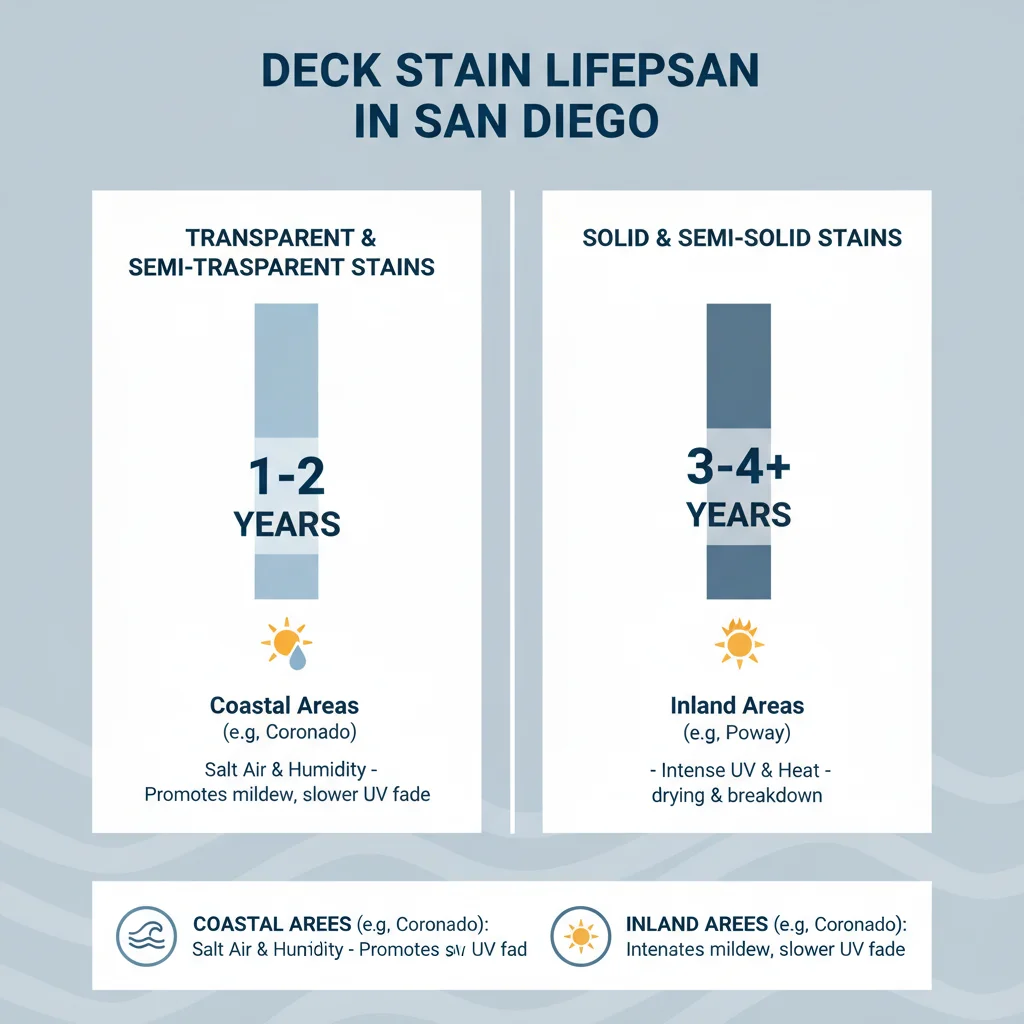
Transparent and Semi-Transparent Stains: These stains are designed to highlight the natural beauty of the wood grain. They contain less pigment, which means they offer less UV protection. The sun’s rays can still penetrate to some degree, accelerating wear. In San Diego’s intense climate, we generally recommend reapplying transparent or semi-transparent stains every 1 to 2 years. If your deck sees heavy foot traffic or is exposed to full, all-day sun in an inland area, leaning towards the shorter end of that spectrum is wise. While they showcase the wood beautifully, their trade-off is more frequent maintenance.
Solid and Semi-Solid Stains: These stains offer much more pigment, essentially acting like a thin layer of paint while still allowing some texture of the wood to show through (for semi-solid) or completely covering it (for solid). The higher pigment content provides superior UV protection, significantly extending their lifespan. For solid or semi-solid stains in San Diego, you can often expect them to last between 3 to 4 years, sometimes even longer with proper care. They effectively block the sun’s harmful rays, keeping the wood underneath better protected. However, even solid stains will eventually fade, chalk, or peel under extreme conditions. The choice between transparent and solid often comes down to your aesthetic preference versus how often you want to commit to deck maintenance san diego.
Signs your deck is ready for a new coat of stain
Even with guidelines, your deck will signal when it needs attention. Knowing what to look for prevents small issues from becoming costly repairs. Regularly inspecting your deck, especially after peak summer, is critical for “deck maintenance san diego.”
Here are key indicators your deck needs a fresh coat:
- Fading or Discoloration: The most obvious sign. Dull, faded, or patchy color indicates diminishing UV protection. Sunnier areas fade fastest.
- Water Absorption Test: Sprinkle water on the surface. If it beads, protection is good. If it soaks in quickly, the wood is no longer sealed and is absorbing moisture, making it vulnerable.
- Graying Wood: A dull gray hue means natural wood fibers are exposed and breaking down. The stain has failed, and immediate protection is needed.
- Cracking, Splintering, Peeling: For solid stains, look for cracking or flaking. For transparent, watch for splintering or small cracks in the wood itself. These indicate moisture damage and UV degradation.
- Mildew or Algae Growth: While cleaning helps, rapid return or deep penetration of mildew suggests the stain’s protective barrier is failing, allowing moisture to linger. This is common on humid coastal decks.
Promptly addressing these signs ensures your deck’s integrity and appeal, preventing extensive, expensive damage or replacement.
Can you extend the life of your deck stain? (Cleaning and maintenance tips)
Yes, you can extend your deck stain’s life with proactive care. A consistent “deck maintenance san diego” routine makes a significant difference in “how long does deck stain last in california.”
- Regular Cleaning: Sweep often to remove debris that traps moisture. Annually, thoroughly clean your deck with a dedicated deck cleaner to remove mildew and grime. Avoid harsh pressure washing; a gentle wash with a soft brush or low-pressure setting is usually sufficient. Rinse well and dry completely.
- Address Spills Immediately: Clean oil, grease, and food spills right away.
- Protect from Furniture and Planters: Use pads under furniture. Elevate planters or use caddies for airflow, preventing moisture buildup.
- Trim Overhanging Branches: Allow more sunlight and air circulation to help the deck dry faster, reducing mold and mildew.
- Annual Inspection: Inspect your deck annually for loose boards, nails, or worn stain. Early detection prevents further damage.
- Proper Drainage: Ensure water drains effectively. Clear gutters and direct landscaping runoff away from your deck.
Following these tips often delays the need for a full reapplication, saving you time and money. For significant issues, or if unsure, professional help for your fence and deck staining needs can make all the difference.
Painting vs. staining your deck: which lasts longer here?
This common question is key to protecting your outdoor investment in San Diego’s climate. Both paint and stain protect wood, but they differ significantly. We also compare these options for fences in our article on fence staining vs. painting in San Diego.
Deck Staining: Stain penetrates wood, conditioning and coloring it while protecting. Transparent/semi-transparent options showcase natural grain; solid stains offer more opacity.
- Pros: Enhances natural beauty, less prone to peeling, easier to reapply (clean and recoat).
- Cons: Generally shorter lifespan, especially transparent options, needing more frequent reapplication.
- Lifespan in San Diego: 1-2 years for transparent/semi-transparent, 3-4+ years for solid stains.
Deck Painting: Paint forms a thick, opaque film, completely covering the grain.
- Pros: Excellent UV protection, superior weather resistance.
- Cons: Prone to peeling, chipping, and cracking on high-traffic deck surfaces. Paint failure requires extensive scraping and sanding before reapplication, making maintenance labor-intensive. It hides the wood’s natural look.
- Lifespan in San Diego: Can last 5-7 years, but often shows wear or peeling sooner, with repairs being more extensive than stain.
Which lasts longer here? In San Diego, a high-quality solid deck stain often offers the best balance of longevity, appearance, and maintenance ease. While paint theoretically lasts longer, foot traffic, constant sun, and temperature shifts make paint more prone to peeling and chipping, leading to frustrating, labor-intensive maintenance. Stains, especially solid ones, penetrate better and wear more gracefully (fading vs. peeling), simplifying recoating. For a natural wood look, even with more frequent cycles, a semi-transparent stain is preferred over paint for showcasing wood beauty.
Ultimately, the choice depends on aesthetic preference and maintenance commitment. For durability and easier long-term care on horizontal deck surfaces in San Diego, professionals often recommend quality deck stains, particularly solid variations.
When to call us
While diligent deck maintenance extends stain life, some jobs are best left to professionals. If your deck requires extensive cleaning, stripping old stain, or significant repairs, it’s time for experts. Professional fence and deck staining ensures the right products, meticulous preparation, and flawless application for lasting protection. Always check a contractor’s license at the CSLB website. Call us at (858) 925-5546 for a same-day estimate.