You’ve decided the dated popcorn ceilings in your San Diego home have to go. Before you or any contractor scrapes a single flake, there’s a critical, legally-required first step for many homes: a popcorn ceiling asbestos test. It’s not just a recommendation; it’s a matter of law and safety.
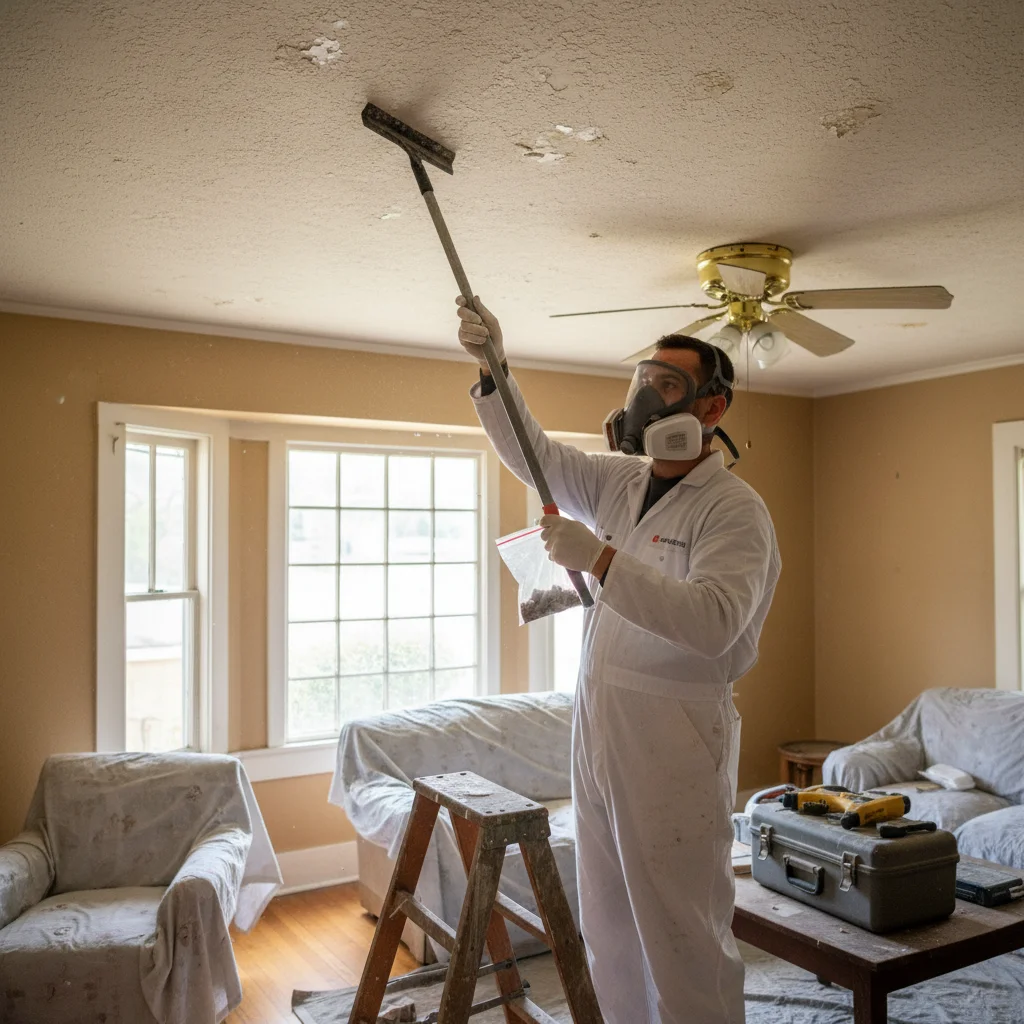
The short answer: yes, for any home built before 1981
Let’s be direct. If your home in San Diego County was built before 1981, you are legally and ethically required to test your popcorn ceilings for asbestos before they are disturbed. There is no gray area here.
Why the 1981 cutoff? Asbestos, a fibrous mineral prized for its fire-retardant and insulating properties, was a common ingredient in spray-on acoustic “popcorn” textures from the 1950s through the late 1970s. The U.S. government began banning most uses in 1978, but contractors were permitted to use up their existing stock of asbestos-containing materials. This means that homes built as late as 1980 or even 1981 could still have it.
You absolutely cannot tell if a ceiling contains asbestos just by looking at it. It doesn’t have a unique color, smell, or texture. The only way to know for sure is to have a small sample professionally analyzed by a lab. Assuming your ceiling is safe because your house was built in 1979 is a dangerous and costly gamble. For the safety of your family and any workers in your home, testing is the mandatory first step.
What San Diego county rules say about asbestos testing
In San Diego County, the regulations surrounding asbestos are strict and enforced by the San Diego County Air Pollution Control District (APCD). These rules aren’t just for large commercial buildings; they apply to residential renovations, including the removal of popcorn ceilings.
The key regulation stipulates that before any renovation or demolition that could disturb materials suspected of containing asbestos, a survey must be conducted. For a project like popcorn ceiling removal, if the total area being removed is over 100 square feet, testing is mandatory. Since most ceiling projects easily exceed this threshold, testing is almost always required for homes built in the relevant era.
Any professional, licensed painting contractor in San Diego will refuse to scrape a popcorn ceiling in an older home without a certified lab report confirming it’s asbestos-free. This isn’t them being difficult; it’s them following the law and protecting their crew and you from liability and severe health risks. A contractor who is willing to skip this step is cutting major corners and should not be trusted with your project or your family’s health. The APCD can issue steep fines for improper handling and disposal of asbestos-containing materials, and the responsibility ultimately falls on the homeowner.
How the asbestos testing process actually works
Getting a popcorn ceiling asbestos test is a straightforward and non-invasive process. It’s not a major project and usually takes less than an hour for the on-site portion. Understanding the steps can help demystify the experience.
1. Hire a Certified Professional
You cannot safely or legally take samples yourself. You need to hire a state-certified Asbestos Consultant or a Certified Site Surveillance Technician (SST). These professionals are trained in proper sampling techniques that minimize the release of any potential fibers.
2. The Sampling
The inspector will arrive with the necessary protective gear. To prevent fibers from becoming airborne, they will lightly spray the small sampling areas with water. Then, using a clean tool, they will carefully remove a few small, coin-sized samples from different areas of the ceiling. This is important because the asbestos-containing texture may not have been applied evenly throughout the home. They will seal each sample in a separate, airtight bag and label it carefully. The spots where samples were taken are tiny and easily patched.
3. Lab Analysis
The samples are then sent to a laboratory accredited for asbestos analysis. The lab uses a technique called Polarized Light Microscopy (PLM) to look at the samples under a high-powered microscope and positively identify the presence, type, and percentage of asbestos fibers.
4. The Report
Within a few business days, you’ll receive an official report detailing the lab’s findings. This document will clearly state whether asbestos was detected (positive) or not detected (negative). This report is the green light (or red light) for your project.
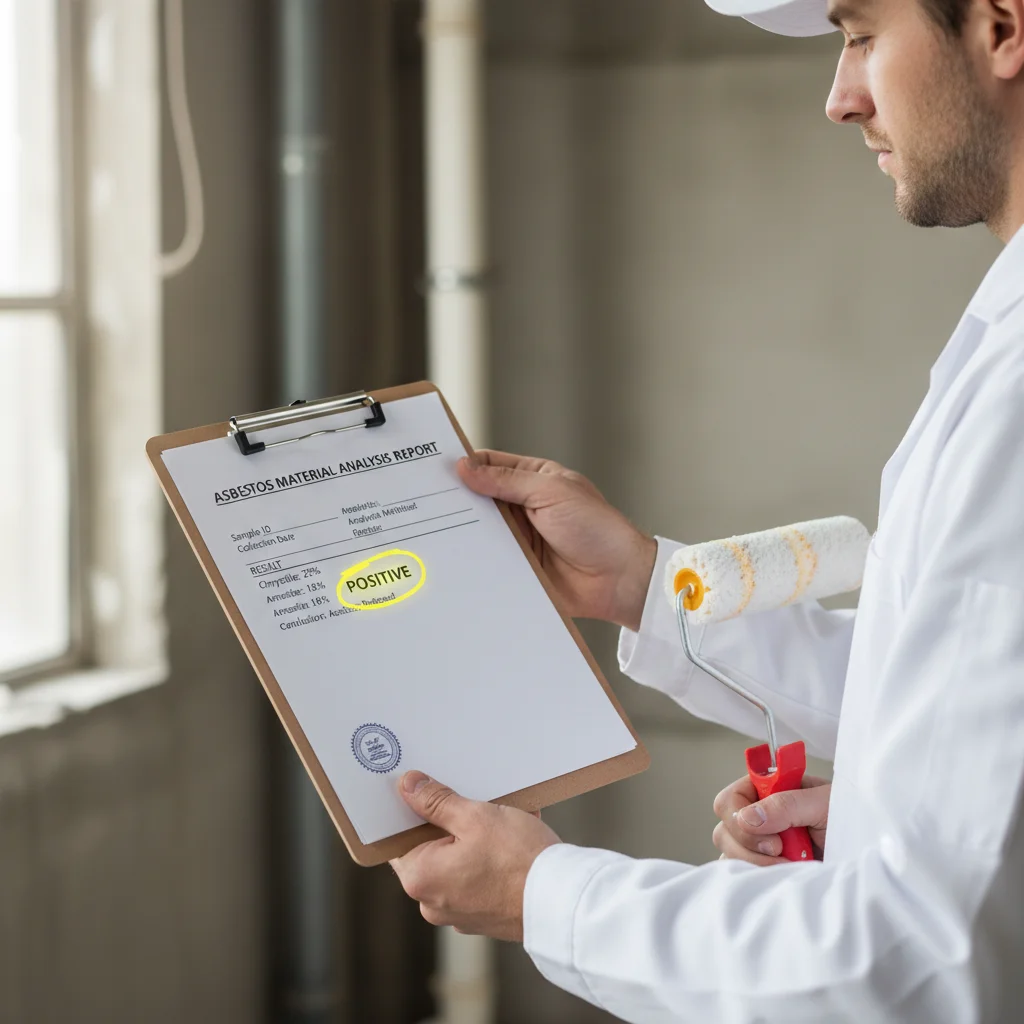
What happens if the test comes back positive
Receiving a positive asbestos test result can feel alarming, but it doesn’t mean your renovation plans are over. It simply means the project must now be handled with a much higher level of care by specialized professionals.
If asbestos is present, the material is classified as Asbestos-Containing Material (ACM). Standard painters and general contractors are not licensed or equipped to remove it. You must hire a California-licensed asbestos abatement contractor. These specialists have the training, certification, and equipment to remove the material safely and in accordance with all local, state, and federal regulations.
The abatement process is extensive:
- Containment: The entire work area will be sealed off from the rest of your house using thick plastic sheeting and tape.
- Negative Air Pressure: HEPA-filter air scrubbers are used to create negative air pressure inside the containment zone. This ensures that no microscopic fibers can escape into the rest of your home.
- Worker Protection: Abatement workers wear full-body disposable suits and full-face respirators.
- Wetting: The ceiling material is thoroughly wetted to prevent dust and keep fibers from becoming airborne during scraping.
- Proper Disposal: All removed material is double-bagged in specially marked, sealed bags and transported to a designated hazardous waste facility.
Once abatement is complete and the area has passed an air quality test, your home is safe. At that point, a team like Paint Pros San Diego can come in to handle the next steps, like skim-coating the ceiling for a smooth finish and applying fresh paint.
Why you shouldn’t scrape it yourself without a test
The temptation to save money by scraping popcorn ceilings yourself is understandable. However, if your home was built before 1981, doing so without a professional asbestos test is one of the most dangerous mistakes a homeowner can make.
The primary risk is your health. When asbestos-containing material is scraped dry, it releases millions of microscopic, needle-like fibers into the air. These fibers are so small they can hang in the air for days and be inhaled deep into the lungs. They are impossible to see, smell, or taste. Once lodged in the body, they can cause fatal diseases decades later, including:
- Mesothelioma: An aggressive and incurable cancer of the lining of the lungs and abdomen.
- Asbestosis: A chronic, progressive lung disease that causes severe scarring and shortness of breath.
- Lung Cancer: The risk of developing lung cancer is significantly higher after asbestos exposure.
Beyond the irreversible health consequences, there are serious financial and legal risks. Improperly removing asbestos can contaminate your entire home, including your HVAC system, furniture, and carpets. The professional remediation required to clean up this level of contamination can cost tens of thousands of dollars, far more than a proper abatement job would have cost in the first place. You could also face fines and legal liability for exposing others to the fibers.
How testing impacts the cost of removal
The results of your popcorn ceiling asbestos test are the single biggest factor in determining the final price of your project. Being prepared for both outcomes is key to budgeting effectively.
The test itself is a relatively minor upfront cost. In the San Diego area, expect to pay between $300 and $600 for a professional to take samples and have them analyzed by a lab. This fee can vary based on the size of your home and how quickly you need the results.
If the test comes back negative: This is the best-case scenario. The project can proceed as a standard popcorn ceiling removal. The cost will depend on factors like square footage, ceiling height, and the desired final texture. We provide a complete overview of what to expect in our guide to popcorn ceiling removal costs in San Diego.
If the test comes back positive: The project’s cost will increase substantially. Asbestos abatement is not a painting job; it’s a hazardous material removal service. The price for abatement is typically two to four times higher than a standard removal due to the extensive safety protocols, specialized equipment, certified labor, and hazardous waste disposal fees. While a standard removal might cost $2-$4 per square foot, asbestos abatement can range from $8-$15 per square foot or more. While this is a significant expense, it’s the required price for ensuring your home is made safe for your family.
When to call us
Whether your asbestos test comes back negative or you need a painting team to perfectly finish your ceilings after a successful abatement, we can help. We manage the entire process, ensuring a smooth, safe, and beautiful result.
Call us at (858) 925-5546 for a same-day estimate.