Stucco is a cornerstone of San Diego architecture, valued for its durability, insulation properties, and classic aesthetic. But even the toughest exteriors face challenges. Knowing how to identify common stucco problems early can save you from costly repairs and maintain your home’s integrity and curb appeal for years to come. For damage that goes beyond surface fixes, see our San Diego stucco repair guide, and once everything’s patched, our stucco painting guide for San Diego covers the finish coat. For damage that goes beyond surface fixes, see our San Diego stucco repair guide, and once everything’s patched, our stucco painting guide for San Diego covers the finish coat, with how often to repaint stucco in San Diego covering the repaint cadence.
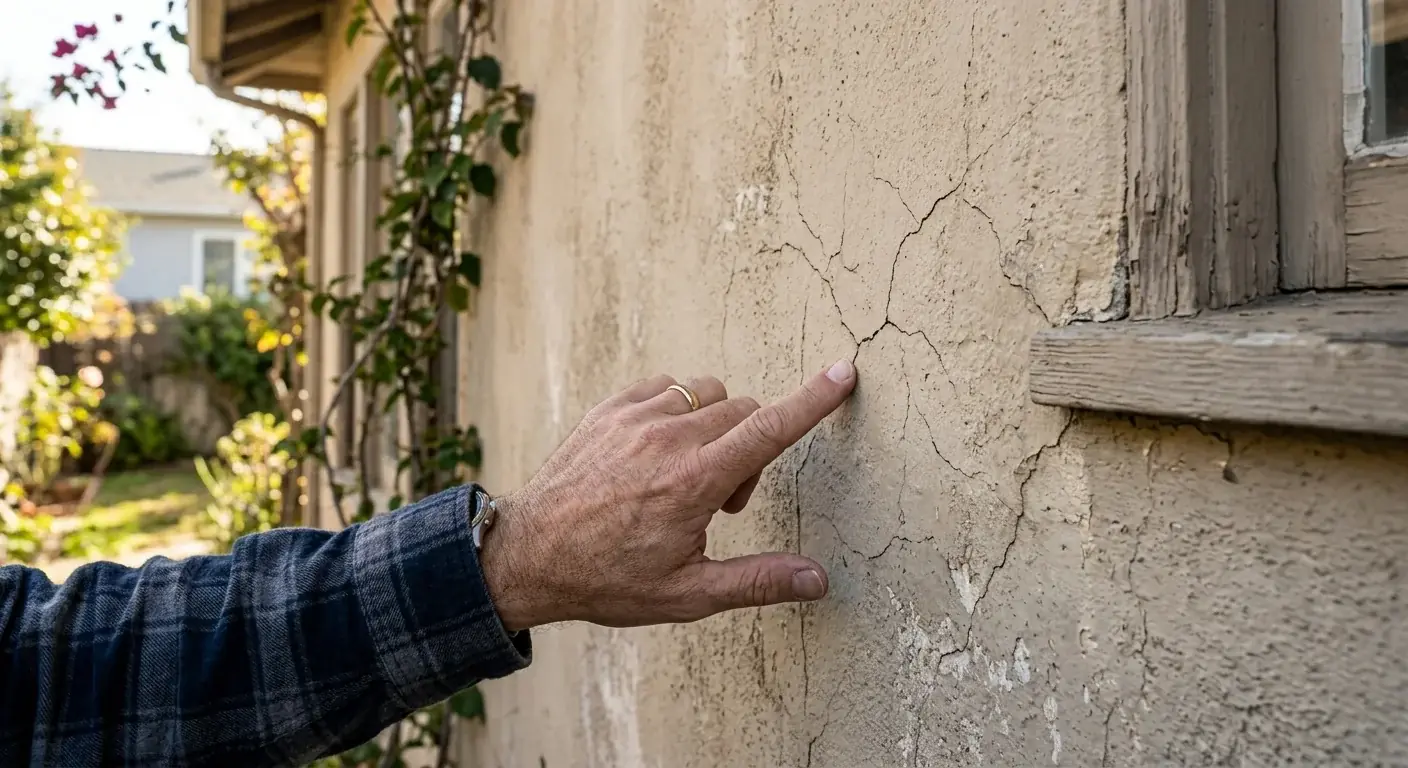
Hairline vs. structural cracks: what’s the difference?
When you spot a crack in your stucco, it’s natural to worry. But not all cracks are created equal. Understanding the difference between a hairline crack and a structural crack is key to knowing whether you need a simple patch or a more involved repair.
Hairline cracks are common and usually superficial. They’re often less than 1/16th of an inch wide, resembling fine lines on the surface. These typically form due to the stucco drying and curing process, minor settling of the house, or normal expansion and contraction from temperature changes. In San Diego’s climate, these are often just cosmetic issues, though they can allow moisture to penetrate if left untreated over a long time. Minor hairline crack repair is a common step we take before painting stucco in San Diego.
Structural cracks, on the other hand, are a more serious concern. These cracks are usually wider (often exceeding 1/8th of an inch), deeper, and can extend through the entire stucco layer and even into the underlying substrate. You might notice them in irregular patterns, running diagonally, horizontally, or in a “step” pattern following mortar joints. These cracks often indicate deeper issues like foundation movement, significant structural settling, or serious water damage behind the wall. If you see cracks like these, it’s crucial to have a professional assess the situation promptly to prevent further damage. Ignoring structural cracks can lead to extensive water intrusion, wood rot, and compromised structural integrity.
Why you’re seeing stains or discoloration on your stucco
Stains and discoloration can detract from your home’s appearance and sometimes signal underlying issues. In San Diego, several factors contribute to stucco discoloration.
One common culprit is algae and mildew growth. This often appears as green, black, or dark gray patches, especially on stucco surfaces that are shaded, receive less sun, or are frequently exposed to moisture. Areas near irrigation systems, under eaves, or on the north side of your home are prime spots. Our humid coastal air provides an ideal environment for these growths. Regular cleaning, such as gentle pressure washing, can often remove surface mildew, but persistent growth might indicate chronic moisture issues.
Dirt and grime accumulation is another frequent cause of discoloration. Over time, dust, pollutants, and debris can settle on stucco, leading to a dull or dirty appearance. This is particularly noticeable in high-traffic areas or where sprinklers consistently spray against the wall, leaving mineral deposits.
Rust stains are also a common problem. These typically appear as reddish-brown streaks originating from metal components like screws, nails, rebar within the stucco, or even exterior fixtures like light sconces or dryer vents. When these metals corrode due to moisture exposure, the rust leaches onto the stucco surface. Persistent rust indicates an ongoing moisture source or corroding metal behind the stucco, which might require more than just cleaning.
While sometimes cosmetic, widespread or recurring discoloration should prompt an investigation into moisture sources. Addressing these issues not only restores your home’s curb appeal but also protects the stucco itself. Sometimes, the best solution for widespread discoloration and a refresh is a new stucco painting and repair job.
What does crumbling or soft stucco mean?
When you notice your stucco flaking, pitting, or feeling soft to the touch, it’s a clear sign of deterioration that shouldn’t be ignored. Crumbling or soft stucco usually indicates a more advanced problem than simple surface cracks or stains, and it often points directly to significant damage.
One reason for crumbling is natural age and weathering. Over decades, especially under the constant San Diego sun and occasional marine layer humidity, stucco can gradually lose its integrity. The binder holding the aggregate together weakens, leading to a chalky texture or small pieces flaking off. This is part of its lifecycle.
However, the most common and serious cause of crumbling or soft stucco is water intrusion. When water gets behind the stucco – perhaps through an unsealed crack, a compromised window flashing, or a leaky roofline – it can cause extensive damage. Water can saturate the lath (the material that holds the stucco in place), causing it to corrode or rot. This completely undermines the stucco’s adhesion to the wall, leading to soft spots that give way when pressed, or larger sections that break off entirely. While freezing and thawing cycles are less of a concern in San Diego, constant dampness can still lead to similar destructive processes.
Soft or crumbling stucco compromises your home’s insulation, creates pathways for pests, and can lead to structural damage if the underlying wood framing is affected. If you discover areas like this, it’s critical to seek professional assessment right away. The longer you wait, the more extensive and costly the stucco repair will become.
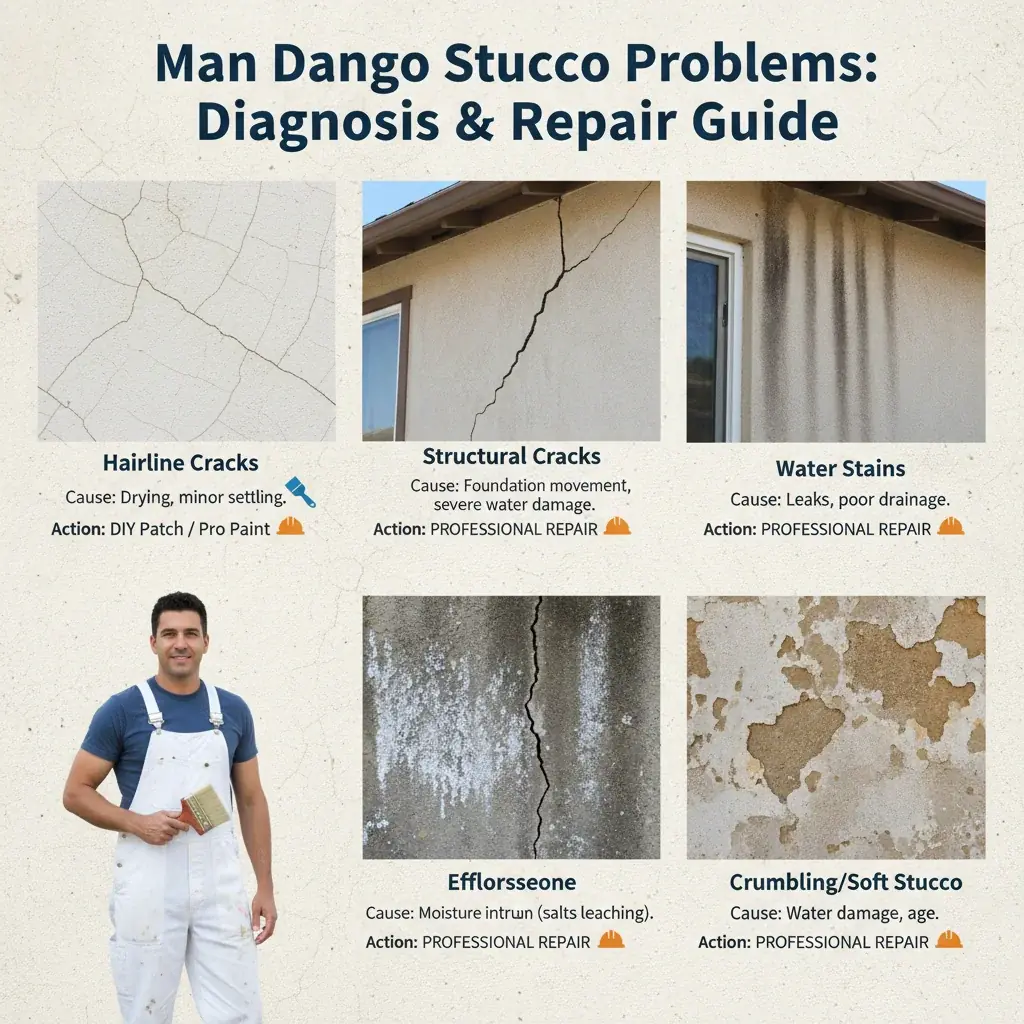
Identifying water damage and efflorescence (salty white powder)
Water damage is arguably the most destructive enemy of stucco, and its signs can sometimes be subtle, or at other times, glaringly obvious. When you see specific indicators, it’s a strong signal that water is getting where it shouldn’t.
One of the most common signs of water damage is dark streaks or stains on the stucco, especially appearing directly under windows, around pipes, near the roofline, or at the base of the foundation. These streaks suggest water is consistently running down those areas, carrying dirt and minerals, and potentially seeping behind the stucco. Other indicators include paint that is peeling, blistering, or bubbling on the stucco surface, as this often means moisture is trapped underneath. You might also find mold or mildew growing on the stucco itself or inside your home’s walls, which is a clear red flag for moisture intrusion. If you press on the stucco in these areas and find it to be soft or spongy, the damage is likely extensive.
Another key indicator of moisture issues is efflorescence. This appears as a powdery, white, crystalline deposit on the surface of the stucco. Efflorescence isn’t mold; it’s salt. It forms when water penetrates the stucco or masonry, dissolves natural salts within the material, and then carries those salts to the surface as it evaporates. As the water evaporates, it leaves the white, powdery salt residue behind. While it might look like a simple surface stain, efflorescence is a definitive sign that water is actively moving through your wall system. It indicates an ongoing moisture problem behind the stucco, which needs to be identified and stopped to prevent further deterioration and costly stucco repair in San Diego. Addressing the source of the water is always the first step before any cosmetic repair.
A simple checklist for inspecting your home’s stucco exterior
Regularly inspecting your home’s stucco can help you catch problems early, potentially saving you from extensive repairs. It’s a simple process you can do a few times a year.
- Walk around your home: Take a slow, deliberate walk around the entire exterior. Look for anything out of the ordinary. Pay attention to the uniformity of the stucco texture and color.
- Look for cracks: Carefully scan for cracks of all sizes. Note if they are thin, hairline cracks, or wider, more irregular patterns. Pay extra attention around windows, doors, and corners, where stress often causes cracks.
- Check for discoloration and stains: Identify any dark streaks, green or black patches (mildew), or rust-colored drips. Note areas with white, powdery efflorescence.
- Feel for soft spots: Gently press on any areas that look suspicious or discolored. If the stucco feels soft, spongy, or gives way easily, it’s a sign of significant moisture damage underneath.
- Inspect moisture-prone areas: Give extra attention to areas consistently exposed to water. This includes stucco directly below rooflines, under windows, around outdoor faucets, near downspouts, and where sprinklers hit the wall.
- Examine the base and foundation: Look for stucco damage where the wall meets the ground. Make sure there’s a proper clearance (at least 4-6 inches) between the stucco and the soil.
- Note paint condition: If your stucco is painted, look for any peeling, bubbling, or blistering paint. These are often signs of moisture trapped beneath the paint film.
Document anything you find with photos. This visual record can be very helpful if you need to call a professional for an estimate or further assessment. Remember, this checklist is for preliminary identification. If you find anything concerning, it’s always best to get a professional opinion.
When a small patch is enough vs. needing a full recoat
Deciding between a minor patch and a complete stucco recoat depends on the extent and nature of the damage. Making the right call can save you money and ensure your home’s long-term protection.
A small patch is generally sufficient for:
- Minor hairline cracks: If they are truly superficial and not indicative of structural movement, isolated hairline cracks can be cleaned, sealed, and patched. This is a routine part of preparing for stucco painting in San Diego.
- Isolated impact damage: A small ding or hole from an accident, where the surrounding stucco is sound, can usually be repaired with a localized patch.
- Superficial stains: If stains are purely cosmetic and can be cleaned off, or if only a tiny, isolated area is discolored due to a minor, resolved issue.
However, a full stucco recoat or extensive repair is often necessary when:
- Widespread cracking: If your stucco has numerous hairline cracks across large sections of your home, or multiple structural cracks, a full recoat after comprehensive crack repair is a more durable solution. Our experts often perform detailed stucco crack repair before painting in San Diego to ensure a lasting finish.
- Extensive discoloration: If large areas of your stucco are permanently stained, faded, or show widespread efflorescence, a full recoat can restore uniformity and provide a fresh, protected surface.
- Significant water damage: If you’ve identified widespread soft spots, crumbling stucco, or persistent water intrusion, portions of the stucco may need to be removed, the substrate repaired, and new stucco applied. A full recoat ensures consistent protection.
- Age and general deterioration: Over many years, stucco can become brittle, chalky, and lose its protective qualities across the entire exterior. A full recoat provides a new, resilient layer that extends the life of your home’s exterior and enhances its curb appeal.
A professional assessment will help determine the best course of action. They can evaluate the overall condition of your stucco, identify underlying issues, and recommend whether a targeted repair or a full recoat will provide the best long-term value and protection for your San Diego home.
When to call us
Identifying stucco problems early is crucial, but knowing when to call a professional is just as important. For anything beyond the most superficial hairline cracks or simple surface cleaning, you need the expertise of a licensed painting and stucco repair contractor. Ignoring significant issues like structural cracks, persistent water stains, or crumbling stucco will only lead to more extensive and costly damage down the road. Our team understands San Diego’s climate and stucco challenges.
Call us at (858) 925-5546 for a same-day estimate.