That doorknob hole has been staring at you for months. Or maybe it’s a spiderweb of cracks spreading from a window corner in your older home. Whatever the damage, you’re wondering what it will actually cost to make your wall look new again in San Diego.
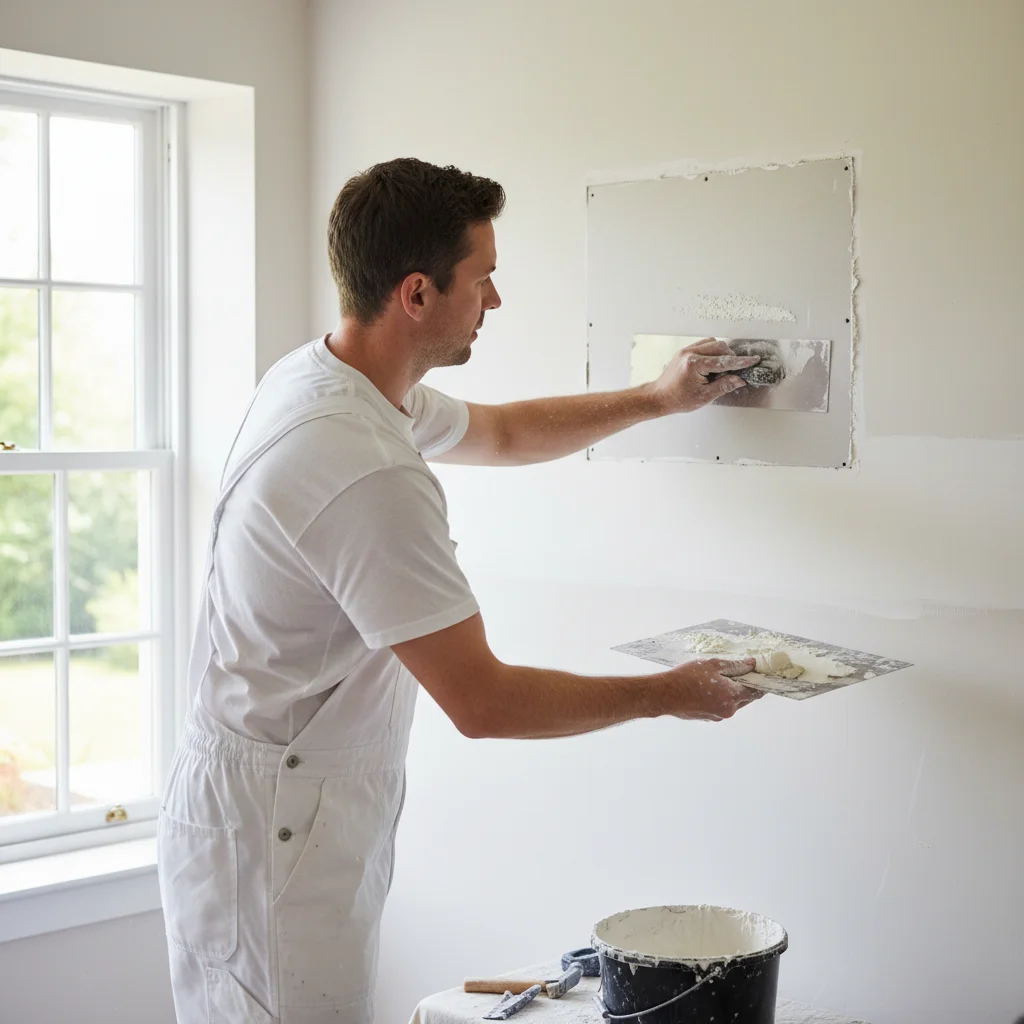
Getting a straight answer on pricing can be tough. The cost depends on the size of the damage, the type of texture on your walls, and whether the repair is a standalone job or part of a larger painting project. Here’s a breakdown of what you can expect to pay for professional drywall repair services in San Diego County.
What small patches vs full sheet replacement actually cost
The single biggest factor in your drywall repair cost is the size and complexity of the damage. We generally break repairs down into two categories: small patches and larger section replacements.
A small patch typically covers damage up to about a square foot. Think of things like:
- A hole from a doorknob hitting the wall
- Damage from removing a towel rack or TV mount
- A fist-sized impact hole
- Several large nail or screw holes from hanging heavy art
For these types of repairs, you can expect the drywall patch cost in San Diego to be between $150 and $400. This price usually includes a site visit, materials like tape and joint compound, and the labor for a two-trip process (one to mud, one to sand and texture). It’s a precise, multi-step process that needs to be done right to be invisible.
A larger section or full sheet replacement is needed for more significant damage. This could be a 4x4 foot section cut out due to a plumbing leak or a full 4x8 foot sheet to fix a major hole. These jobs are more involved and can cost anywhere from $400 to $1,200 or more.
The higher cost reflects:
- More materials: Purchasing, delivering, and cutting a new sheet of drywall.
- More labor: Securing the new sheet, taping all the new seams, and applying multiple coats of mud.
- Increased complexity: Blending a large new section into an old wall requires significant feathering and sanding to avoid visible seams.
These price ranges are for the repair and texturing itself. Priming and painting the repaired area is the final step, which is often quoted separately or as part of a larger painting package.
Why texture matching is harder than people think
Getting a drywall patch to be perfectly flat is one thing. Making it disappear into the rest of your wall is another. In San Diego, most homes built after the 1970s don’t have perfectly smooth walls. They have a texture, and matching it is where true craftsmanship comes into play. A bad texture job can look worse than the original hole.
The two most common textures we see are orange peel and knockdown.
Orange peel texture
This is a fine, bumpy texture that looks like the skin of an orange. It’s applied with a hopper spray gun. The challenge for professional texture matching in San Diego is duplicating the exact pattern. This requires dialing in the air pressure of the compressor, the consistency of the thinned-down drywall mud, and the size of the nozzle on the spray gun. If the splatter is too fine, it will look like a smooth spot. If it’s too heavy, it creates a blobby, obvious patch.
Knockdown texture
Knockdown is a two-step process. First, a splattered texture (like a heavy orange peel) is sprayed onto the wall. Then, after it has partially dried for just the right amount of time, it’s “knocked down” or flattened with a wide, flexible knife. The timing is critical. Knock it down too soon, and it smears into a mess. Wait too long, and the splatters will be too hard to flatten. The angle and pressure of the knife also determine the final look.
An experienced painter has spent years learning how to read an existing wall and replicate the texture with the right tools and techniques. It’s an art form that cheap or inexperienced contractors often get wrong, leaving you with a permanent reminder of the repair.
Common San Diego damage: settling cracks, water stains, picture holes
Living in Southern California comes with its own unique set of wall problems. Over the years, we’ve repaired thousands of walls across the county and a few common issues pop up again and again.
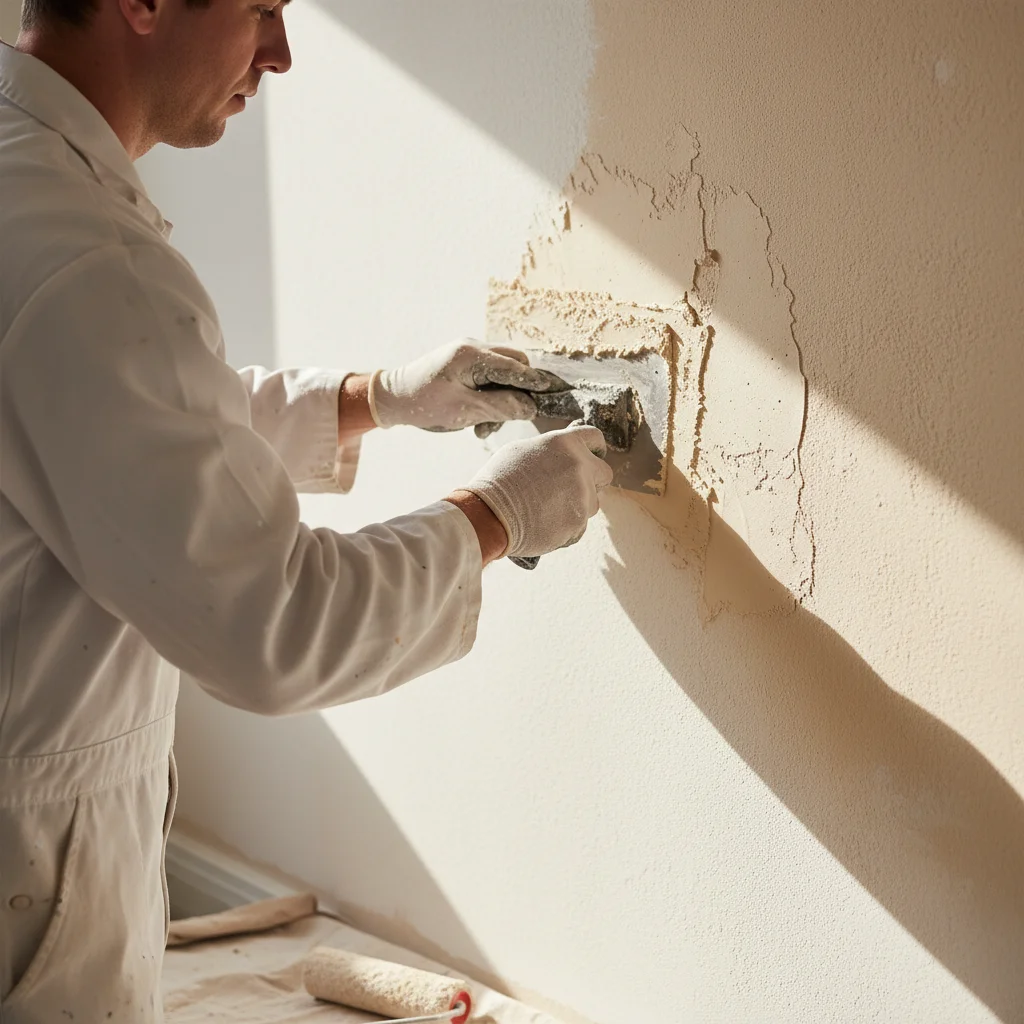
Settling cracks
San Diego has a wonderful variety of older homes, especially in neighborhoods like North Park, Mission Hills, and Kensington. These character homes have had decades to settle, which often causes hairline cracks to appear around door and window frames. Simply spackling over these isn’t enough; the crack will reappear. The proper fix involves using a utility knife to V-groove the crack, applying flexible fiberglass mesh tape, and then feathering multiple thin coats of joint compound to create a strong, invisible repair.
Water stains
From a leaky pipe inside a wall to a problem with exterior stucco wicking in moisture, water damage is a frequent call. The most important step is to fix the source of the leak first. Once you’re sure the area is dry, we cut out the stained and softened drywall. If the damage occurred in a home built before 1978, it’s critical to follow EPA Lead-Safe practices. After replacing the drywall, we apply a shellac-based stain-blocking primer to the patch to ensure the water stain never bleeds through the new paint.
Picture holes and anchor damage
This is the most common type of wear and tear. While a few small nail holes can be filled by a handy homeowner, dozens of them, or larger holes left by drywall anchors, are best left to a pro, especially if you’re preparing for a new paint job. We address these as part of our standard prep work, ensuring every inch of your wall is perfect before the first roller of paint touches it.
When drywall repair gets bundled with interior painting
While we handle standalone drywall jobs, the best value for homeowners is often bundling repairs with a full interior painting project. It’s more efficient, cost-effective, and delivers a much better final result.
When you hire a painter to repaint a room or your whole house, minor drywall prep is usually included. For more significant repairs, it’s added to the scope of work. The process is seamless. Our crew handles the repair, texturing, and priming, and then flows directly into the painting phase. There’s no need to coordinate with a separate drywall contractor and hope their work is up to a painter’s standard.
A dedicated drywaller’s job is done when the patch is in. A painter’s job is done when the patch is invisible under two coats of premium paint. We have a vested interest in making the repair perfect because we’re the ones who have to paint over it.
Combining the services saves money on setup and travel time. It also ensures color and sheen consistency, as the fresh patch will be primed and painted with the exact same products as the rest of the wall. To get a better sense of project costs, you can see our guide on the cost of interior painting in San Diego.
How long a typical repair takes start to finish
One of the biggest mistakes in drywall repair is rushing the process. Joint compound needs time to dry and cure properly. A quality repair is almost always a multi-day job.
- Day 1: Patch and First Coat. The first step is to install the patch, tape the seams, and apply the first layer of mud. This coat needs to dry thoroughly, which usually takes several hours or overnight. In humid coastal areas like La Jolla or Del Mar, drying can take even longer.
- Day 2: Skim, Sand, and Texture. Once the first coat is hard, we’ll apply a thin skim coat to fill any imperfections and feather the edges. After that dries, we sand it perfectly smooth. Finally, we apply the matching texture and let it cure.
- Day 3: Prime and Paint. Only when the texture is completely dry can it be primed. Primer seals the porous new mud and texture, ensuring the final paint coats have a uniform sheen. After the primer dries, we can apply the two finish coats of paint.
Anyone who tells you they can patch, texture, and paint a significant repair in a single day is cutting corners. That approach leads to cracks, bubbling tape, and “flashing,” where the repaired spot shows through the paint as a different sheen.
Red flags in a cheap drywall bid
Getting a lowball offer on drywall work might seem tempting, but it often costs more in the long run to fix a botched job. Watch out for these red flags from drywall repair contractors.
- Promises a One-Day Fix: As we covered, proper drying time is non-negotiable. A one-day promise for anything more than filling nail holes means they are using fast-setting “hot mud” improperly or painting over wet compound.
- Vague Description of Work: A professional quote will explicitly mention texture matching and priming. If the bid just says “patch hole for $100,” you’re likely going to get a smooth, unprimed patch that sticks out like a sore thumb.
- No License or Insurance: Anyone performing work over $500 in California must be a licensed contractor. For this type of work, they should have a C-33 Painting and Decorating license. Always verify a contractor’s license on the CSLB website. An unlicensed operator carries no insurance, putting all the risk on you.
- Using the Wrong Materials: Ask what they use. If they plan to fill a baseball-sized hole with spackle from a small tub, that’s a problem. Spackle shrinks, cracks, and isn’t suitable for anything but tiny nail holes. Professional repairs require joint compound and reinforcing tape.
A quality drywall repair should be completely invisible once painted. It’s an investment in maintaining the value and appearance of your home.
When to call us
If you’re dealing with a few pinholes, a DIY kit might be all you need. But for cracks, water damage, medium-to-large holes, or any job that requires texture matching, professional help is the only way to guarantee a seamless result. When you’re ready to make those wall imperfections disappear for good, especially as part of a fresh paint job, we’re here to help.
Call us at (858) 925-5546 for a same-day estimate.