Stucco is the quintessential look for San Diego homes, but it comes with a common frustration: cracks. Even small hairline fractures can compromise your home’s appearance and weather protection. When it’s time to paint, you’re faced with a critical choice between two very different products: standard acrylic paint and specialized elastomeric coatings.
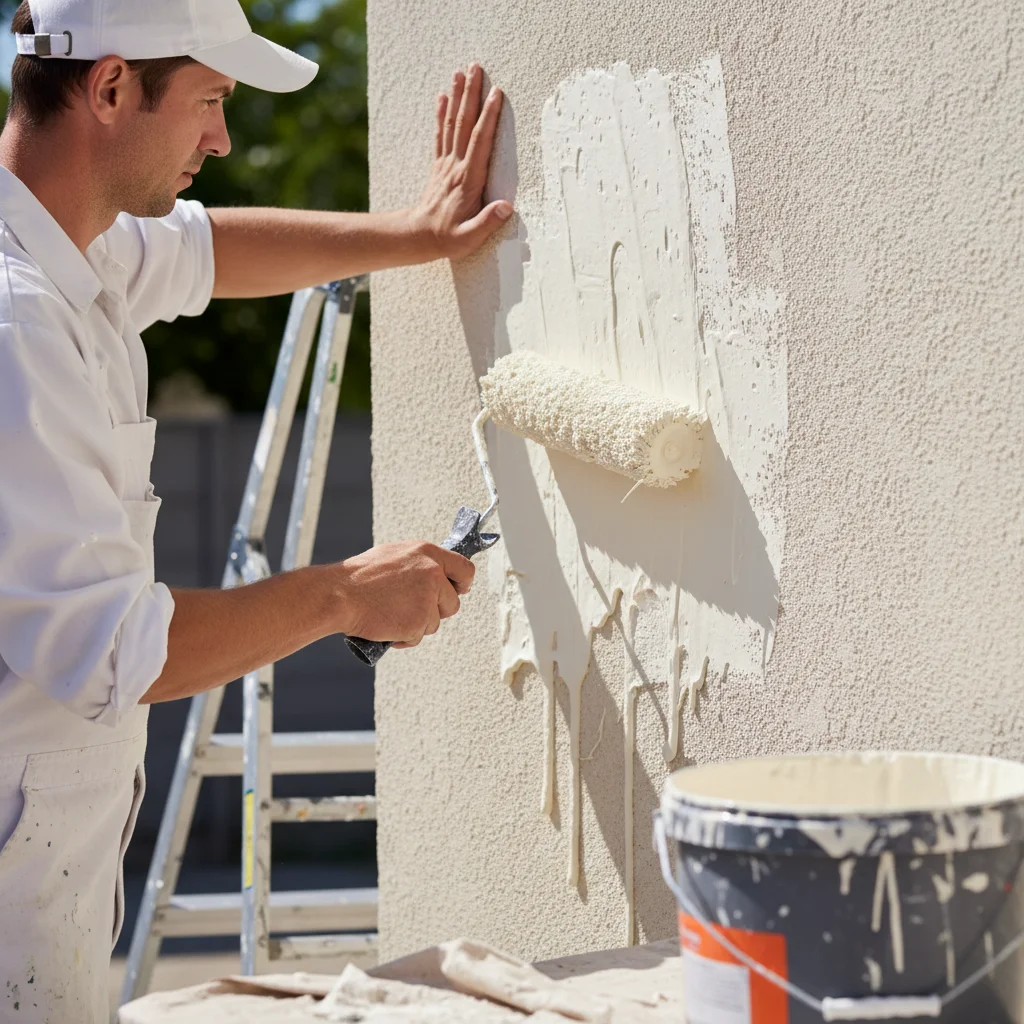
What is elastomeric paint and how does it work?
Elastomeric paint isn’t just a color; it’s a high-performance coating. The name itself gives a clue: it’s elastic. This type of paint is made with a much higher volume of solids and specialized acrylic polymers, which makes it incredibly thick—up to 10 times thicker than traditional acrylic paint.
When applied, it doesn’t just sit on the surface. It forms a durable, flexible, and continuous membrane that bonds to the stucco. Think of it less like a coat of paint and more like a thick, waterproof rain jacket for your home. This membrane is designed to stretch and return to its original form. As your home settles or responds to San Diego’s temperature fluctuations from a cool, marine-layered morning to a hot afternoon, the elastomeric coating moves with it. This flexibility is what allows it to bridge cracks and provide superior protection against moisture.
Because of its thickness, applying elastomeric paint for stucco requires a specific process, often involving spraying and back-rolling to work the material into the stucco’s texture. The result is a seamless, tough layer that provides one of the best forms of waterproof paint for stucco san diego homeowners can choose.
When to use elastomeric for hairline stucco cracks
The primary job of an elastomeric coating is to solve the problem of hairline cracks in stucco. These are the tiny, web-like fractures, typically 1/16th of an inch wide or smaller, that plague so many homes in our area. While they might seem minor, they can allow water to seep into the wall system, leading to bigger problems down the road.
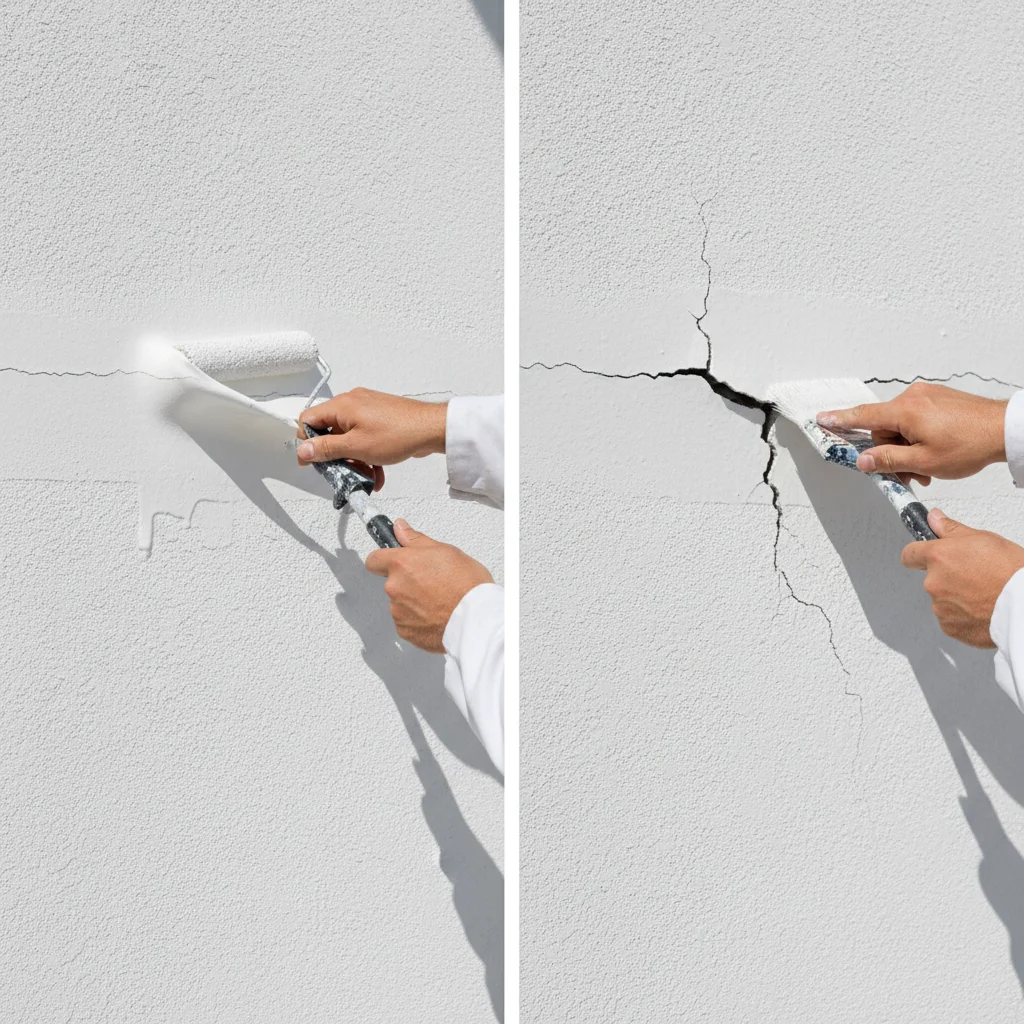
Elastomeric paint is the best paint for stucco cracks of this size because it literally bridges the gap. Its thick, flexible film stretches over the crack, sealing it from the elements. As the stucco expands and contracts, the paint stretches with it, keeping the crack covered and waterproof. A standard acrylic paint, by contrast, is rigid. It will simply crack right along with the stucco, offering no long-term solution.
It’s important to note that elastomeric paint is a solution for hairline cracks, not large structural ones. For wider cracks, proper preparation is essential before any coating is applied. This involves cleaning, patching, and ensuring the underlying issue is addressed. We cover this in detail in our guide to stucco crack repair before painting in San Diego. For homes with a history of these fine cracks, an elastomeric system is a proactive investment in preventing them from reappearing through your new paint job.
The pros and cons of acrylic paint on stucco
While elastomeric coatings are excellent for specific problems, high-quality 100% acrylic paints are still a fantastic and often preferred choice for many stucco homes. Products like Sherwin-Williams Duration or Benjamin Moore Aura Exterior offer incredible performance and have their own set of advantages.
The biggest pro for acrylic paint is breathability. Stucco needs to breathe, allowing moisture vapor from inside the home to escape. Premium acrylics are permeable, which helps prevent moisture from getting trapped in the wall system. Elastomeric coatings are far less breathable, which is great for waterproofing from the outside but can sometimes trap existing moisture. Acrylic paints also offer superior color retention and fade resistance, keeping your home looking fresh for longer under the strong San Diego sun. Application is also more straightforward than with thick elastomerics, which can contribute to a lower overall project cost.
The main con, as we’ve discussed, is that acrylic paint is not flexible. It provides a hard, durable shell but has no ability to stretch. If an existing crack wasn’t perfectly repaired or a new one forms, the paint will crack right along with it, breaking the seal and leaving your home vulnerable. This is the central trade-off in the elastomeric vs acrylic paint debate: breathability and colorfastness versus waterproofing and crack-bridging. For a home with pristine, stable stucco, a top-tier acrylic might be the perfect fit for your exterior painting project.
Cost and lifespan comparison for San Diego homes
The difference in upfront cost between an elastomeric and an acrylic paint job is significant. Homeowners should be prepared for a higher investment when choosing an elastomeric system. There are two main reasons for this.
First, the material itself is more expensive. A gallon of premium elastomeric coating can cost 50-100% more than a gallon of top-quality acrylic paint. Second, the application is more labor-intensive. Due to its thickness, elastomeric paint has a lower spread rate, meaning you need more gallons to cover the same square footage. The application process itself often requires a heavy-duty sprayer followed by diligent back-rolling to ensure the coating fully penetrates the stucco texture and achieves a uniform thickness. This extra labor and material adds up. You can generally expect a full elastomeric project to cost between 25% and 50% more than a project using premium acrylic paint.
However, the higher upfront cost can be justified by a longer lifespan and superior protection. A well-applied acrylic paint job from a professional might last 7 to 10 years in San Diego. A high-build elastomeric system can last 10 to 12 years or even longer, all while actively preventing water intrusion and hiding hairline cracks. You’re paying more for a specialized product that solves a specific problem and provides a more robust, protective layer for your home.
Can you paint over old elastomeric coatings?
This is a common and important question for homeowners whose stucco has been previously coated. The short answer is yes, you can paint over an old elastomeric coating, but it requires careful assessment and preparation.
The key is the condition of the existing coating. If the old elastomeric paint is still well-adhered, clean, and in sound condition, you can typically apply another coat of elastomeric paint directly over it after a thorough pressure wash. This essentially renews the protective membrane for another decade or more.
Painting over old elastomeric with a standard acrylic paint is more complicated. Because the elastomeric base is flexible, putting a hard, rigid acrylic film on top can lead to problems. As the elastomeric layer expands and contracts, it can cause the less flexible acrylic paint to crack and peel prematurely. It’s generally not the recommended approach unless a specific bonding primer is used and the old coating is in perfect condition.
If the old elastomeric coating is failing—peeling, blistering, or chalking excessively—it must be addressed before any new paint is applied. This may involve scraping, sanding, and potentially water-blasting to remove all the loose material. Painting over a failing coat, regardless of the new product you choose, is a recipe for failure.
How a pro decides which product is right for your home
Choosing between elastomeric and acrylic paint isn’t a simple matter of one being “better” than the other. A true professional painter makes a recommendation based on a detailed inspection of your home and a conversation about your goals.
First, we assess the condition of your stucco. Are there widespread hairline cracks? Are there signs of previous water intrusion or staining? If the stucco is riddled with fine cracks, we will almost always recommend an elastomeric system as part of a comprehensive stucco painting plan. If the stucco is in excellent shape with no cracking, a premium acrylic like Sherwin-Williams Duration may provide all the beauty and durability you need at a lower cost.
Second, we consider your priorities. Is your main goal to stop annoying cracks from reappearing and create a waterproof barrier? Or are you focused on achieving a specific color with maximum fade resistance? This helps guide the product choice.
Finally, we look at the home’s location and exposure. A coastal home in La Jolla getting blasted by salt and moisture has different needs than a home in a hotter, drier inland area like Escondido. A reputable contractor will explain the pros and cons of each option for your specific situation, ensuring you make an informed decision. Always be sure you’re working with a properly licensed contractor, which you can verify on the CSLB website.
When to call us
Choosing the right coating for your stucco is a technical decision that impacts your home’s long-term health and curb appeal. A professional evaluation is the best way to determine if the crack-bridging benefits of elastomeric paint outweigh the breathability and cost-effectiveness of a premium acrylic. We can assess your home’s unique needs and provide a clear recommendation.
Call us at (858) 925-5546 for a same-day estimate.