You’ve picked the perfect paint color and you’re ready to transform your room. But before you dip that brush, there’s a small, often overlooked step that makes all the difference: caulking your baseboards. Skipping this crucial prep can turn an otherwise great paint job into something that just looks… off.
What caulking actually does for your trim
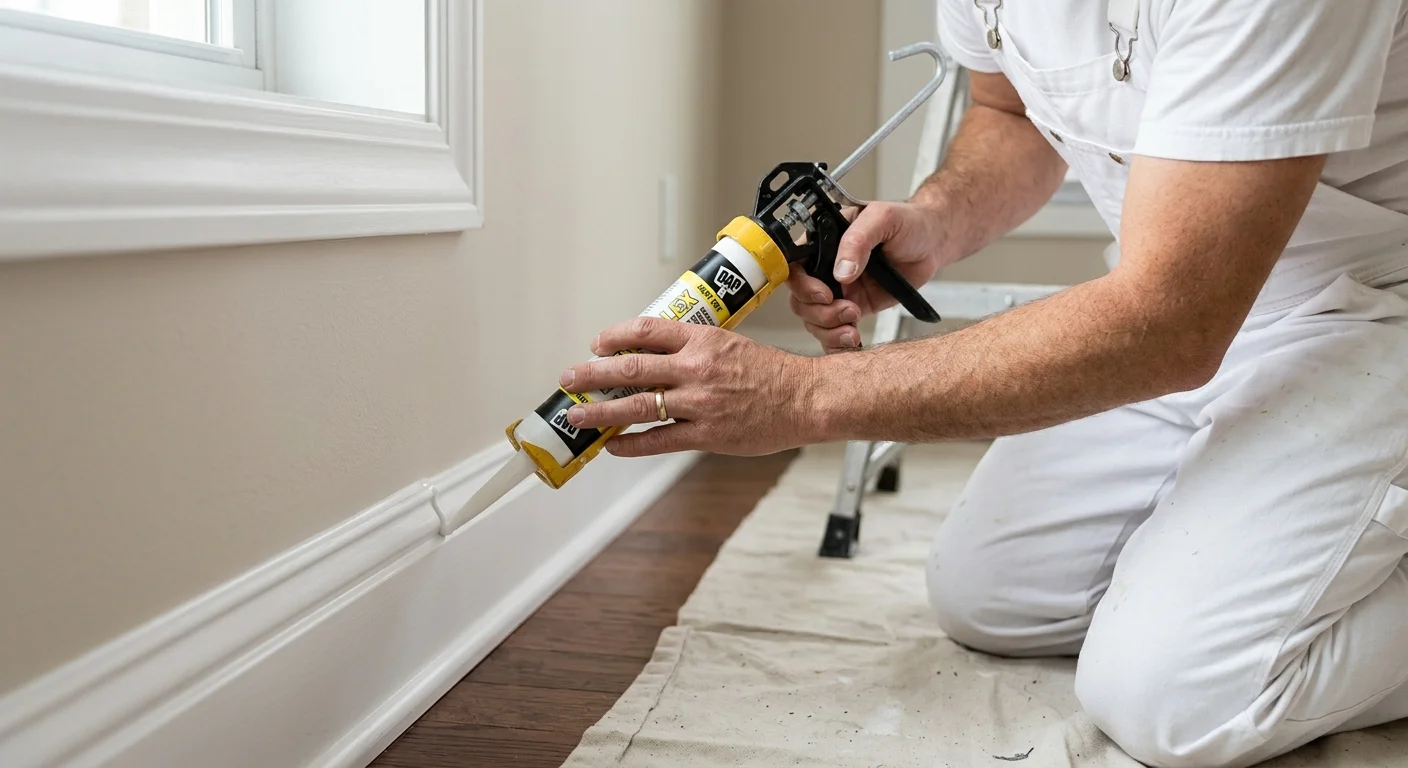
Caulking serves as a vital bridge between your baseboards and the wall. Think of it as a flexible filler that seals any tiny cracks or gaps. These imperfections naturally appear as houses settle, wood expands and contracts with San Diego’s humidity changes, or during initial construction. Left unsealed, these gaps are like glaring spotlights on an otherwise smooth surface.
When you apply caulk, you’re not just filling space. You’re creating a continuous, smooth plane. This ensures that when paint goes on, it lays evenly across both surfaces, creating the illusion of a single, perfectly fitted piece of trim. Without caulk, paint can seep into the gaps, or simply bridge over them, leaving unsightly lines and voids. It’s the secret to making your baseboards look like they’re custom-fitted, not just tacked on. This attention to detail is what separates a basic paint job from truly finished trim, doors, and baseboards. It seals out dust and moisture too, adding a layer of protection to your home.
The shadow lines that make paint jobs look cheap
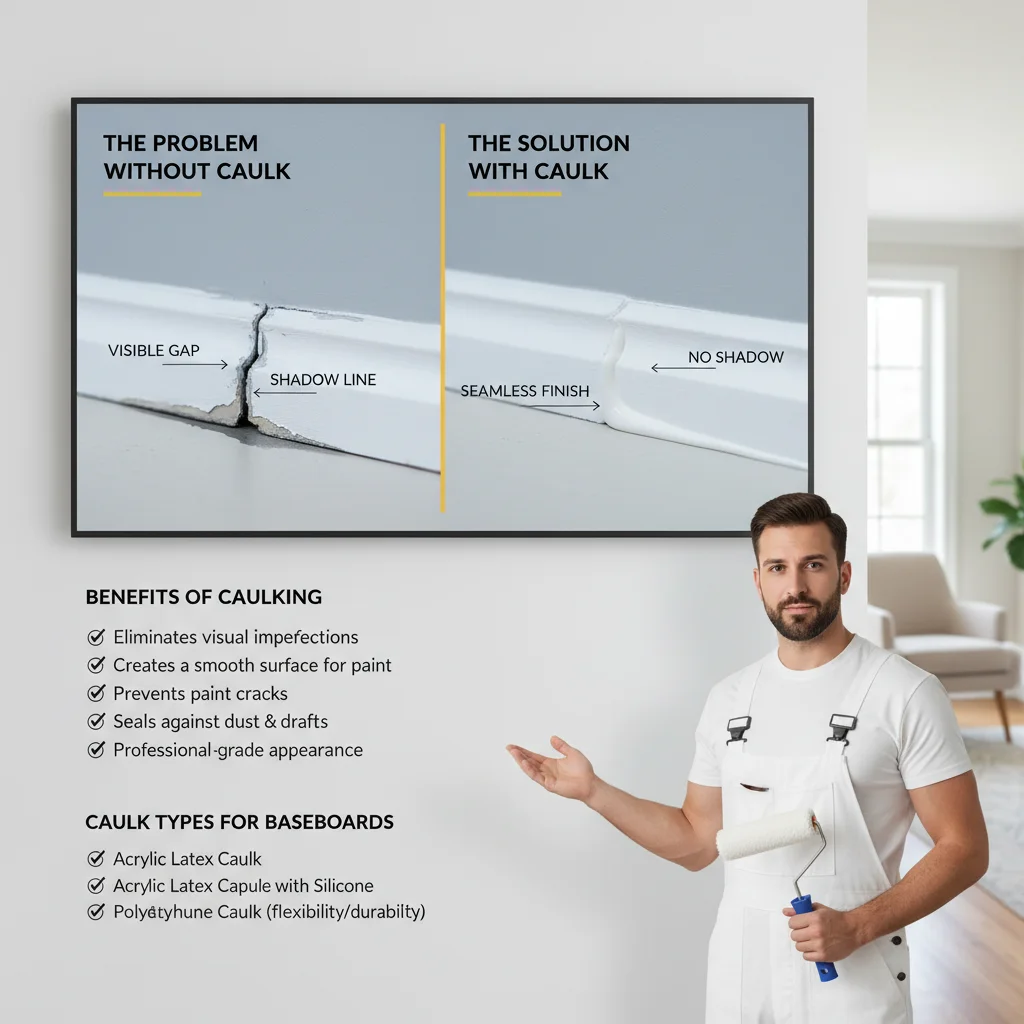
Imagine a newly painted room with a crisp, clean wall color and bright white trim. Now, look closer at the baseboards. Do you see thin, dark lines running along the top edge, where the baseboard meets the wall? Those are shadow lines, and they’re the tell-tale sign of uncaulked gaps. Even the smallest imperfection casts a shadow, especially in natural light from your windows.
These shadows draw the eye directly to the imperfections, making the entire paint job appear unfinished and amateurish. Paint itself has no filling properties for these types of gaps. It will simply follow the contours of the surface, highlighting any crevices instead of concealing them. What you thought would be a smooth transition becomes a jagged edge, undermining the entire aesthetic of your room. It’s these seemingly minor details that significantly impact the overall perceived quality and value of your home’s interior. A professional finish demands the elimination of these distracting visual flaws.
How to get a seamless, professional finish
Achieving that perfectly seamless look isn’t magic; it’s about proper preparation, and caulking is at the heart of it. First, clean the baseboards thoroughly. Any dust or debris will prevent the caulk from adhering correctly. Next, choose the right caulk (more on that below). Apply a steady, even bead along the joint where the baseboard meets the wall. The key is consistency and a firm hand.
After applying the bead, tool it immediately. This means using a damp finger, a specialized caulk tool, or even a wet sponge to smooth the caulk into the gap. This process removes excess caulk and presses it firmly into the joint, creating a concave or flat surface that blends seamlessly. This is where the magic happens. Once dried, this smooth, filled joint is ready for paint, allowing for a truly unified and flawless appearance. For more detailed instructions on specific techniques for a pristine finish, you might find our guide on trim and baseboard painting in San Diego helpful.
Choosing the right caulk for the job
Not all caulk is created equal, and selecting the correct type is crucial for lasting results. For interior painting projects, especially around baseboards, you’ll want a high-quality acrylic latex caulk that’s explicitly labeled as “paintable.” These caulks are flexible enough to accommodate minor movement without cracking, yet they provide a hard, smooth surface once dry.
Look for caulk that offers good adhesion to both wood and drywall. Some premium acrylic latex caulks also contain silicone for added flexibility and durability, often called “acrylic latex caulk with silicone.” Avoid pure silicone caulk for painting projects, as paint does not adhere well to it. Also, check the drying time specified on the tube. Most paintable caulks allow painting within a few hours, but some might require a full 24 hours to cure properly. Picking the right product ensures that your prep work stands the test of time and takes paint beautifully.
When a pro painter includes caulking in their prep
For professional painters, caulking baseboards isn’t an optional add-on; it’s a fundamental part of the standard preparation process. When you hire Paint Pros San Diego for your interior painting project, our crews meticulously inspect all trim for gaps and apply caulk as needed. This thorough prep work is a significant factor in the superior quality of a professional paint job compared to a DIY attempt.
Professional painters understand that excellent paint adhesion and a flawless finish begin long before the first brushstroke. They have the experience to quickly identify problem areas, select the right caulk, and apply it with precision and efficiency. This expertise saves you time, prevents frustrating mistakes, and ultimately delivers a result that elevates your home’s appearance. It’s a key part of the value you get when you trust licensed professionals. You can always check a contractor’s license with the CSLB at cslb.ca.gov.
Why this step is non-negotiable for a quality result
Ultimately, caulking your baseboards before painting is non-negotiable if you want a truly professional and long-lasting finish. It’s the difference between a paint job that looks like it was done quickly and one that looks like it belongs in a magazine. This simple yet critical step eliminates distracting shadow lines, creates a uniform surface for paint application, and helps protect your home from dust and drafts.
Beyond aesthetics, properly caulked baseboards contribute to the longevity of your paint job. They prevent paint from cracking or flaking prematurely in areas of movement or temperature fluctuations. For homeowners in San Diego, where coastal environments can impact materials, this attention to detail is even more vital. Investing time in caulking, or hiring a professional who includes it in their prep, ensures your freshly painted rooms look their best for years to come.
When to call us
While caulking might seem like a small detail, it takes skill and precision to do correctly for a truly perfect finish. If you’re tackling a large painting project, or simply want to ensure your baseboards look absolutely flawless, a professional touch makes all the difference.
Call us at (858) 925-5546 for a same-day estimate.